The report reveals that the natural cycle in commercial real estate appears to be running its course, somewhat independent of the results of the presidential contest.
Economist Lee Ohanian on how the president-elect’s plans to reduce globalization and immigration could undermine his promises of job growth and prosperity.
Economist Jerry Nickelsburg on how not leveraging the windfall of abundant natural resources into investments into education and infrastructure limits economic growth.
Research co-authored by UCLA professor Mark Kaplan attempted to explain how different aspects of an economic downturn affect suicide rates and alcohol-related suicides in particular.
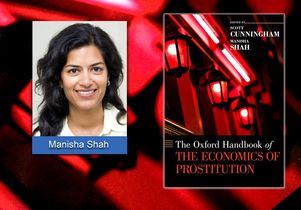
Although prostitution has been studied by various social scientists, the “world’s oldest profession” has received less attention from economists. But that’s changing.
UCLA Anderson Forecast’s quarterly outlook for the national economy foresees real gross domestic product growth in the 2 percent to 2.5 percent range throughout 2017 and 2018, where it has been for the past seven years.
The acclaimed scholar of immigrant and low-wage workforce issues says he looks forward to studying the gig economy, young workers and immigrant workers.
A UCLA political scientist and an American University political historian talked about the key factors in the presidential election Tuesday night before a packed crowd at the Hammer Museum.
In industrial and multi-family housing, the optimism of the past few years continued, according to a survey by the UCLA Anderson Forecast and the Allen Matkins law firm.
Journalists from across the nation gathered Tuesday night at Capitale in New York for the presentation of the annual awards, presented by the UCLA Anderson School.
Professors Sholmo Benartzi and Alan Castel say that as people age, they tend to focus on positive memories and those blindspots to past negatives can have bad financial consequences.
Mary Nichols, chair of the California Air Resources Board and a UCLA faculty member, is a fierce fighter for the environment. She has championed a difficult cause without succumbing to bitterness or wallowing in the polarization that has crippled Sacramento and Washington.
UCLA economist Lee Ohanian shares his thoughts about the lasting and far-reaching impact of a 12-year-old study he co-authored that criticized some of FDR’s New Deal policies.
A new study conducted by researchers in UCLA Luskin School of Public Affairs finds decline in giving since 2006 amid urgent and rising need in Los Angeles.
Social work professor Mark Kaplan found that an increase in high-risk drinking during the Great Recession may explain the rise in alcohol-related suicides by men — but not women.
Five UCLA experts from across the campus recently assembled a big-picture view of the political turmoil, economic crisis and investigation into widespread corruption that are shaking Brazil to its core.
The head of the UCLA Ziman Center for Real Estate talks about the impact of the $1.86 billion, 80,000-seat NFL stadium and 6,000-seat performance venue now under construction in Inglewood.
The Royal Geographical Society is awarding its Founder's Medal, one of two Royal Medals it is presenting this year, to UCLA Luskin School of Public Affairs professor Michael Storper for his leadership in human and economic geography.
Economics professor Lee Ohanian co-writes an op-ed that criticizes Donald Trump’s ideas on international trade because they would lead to less commerce with the rest of the world.