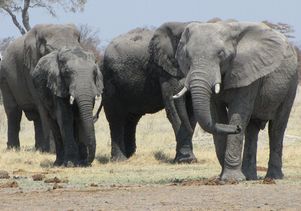
UCLA professor Blaire Van Valkenburgh said the animals in question “are all that is left of a once much more diverse megafauna that populated the planet only 12,000 years ago.”
A UCLA study crunched the numbers from more than 74,000 wine reviews in top magazines and, statistically speaking, environmentally friendly wine tastes better.
Magali Delmas, an environmental economist at UCLA, has been focusing on finding the most effective strategies to motivate people to change their behavior and conserve electricity.
UCLA lecturer Andy Rice introduces his students to entomophagy, bug eating, which may someday become a smart alternative to resource-intensive foods such as beef.
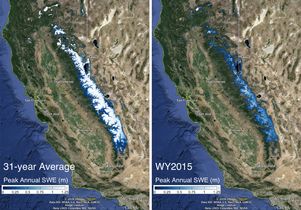
A UCLA-led research team used big data analysis and new levels of precision to study three decades of data. The new tool could be useful for studying other regions.
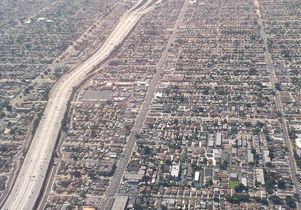
The L.A. Energy Atlas project, a first-of-its-kind interactive website, enables policymakers and the public to sort energy consumption and emissions by building size, neighborhood and other metrics.
Mary Nichols, chair of the California Air Resources Board and a UCLA faculty member, is a fierce fighter for the environment. She has championed a difficult cause without succumbing to bitterness or wallowing in the polarization that has crippled Sacramento and Washington.
During a launch event for the new issue, editor-in-chief Jim Newton spoke to Mary Nichols, whose work as an environmental advocate is profiled in the magazine.
Jon Christensen asserts that in analyzing the results of Proposition 84, which allocated more than $5 billion to parks and environmental resources, it’s clear that benefits come when priorities are clearly defined.
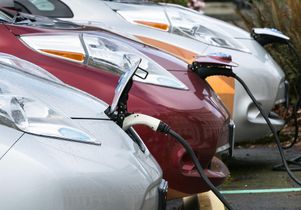
J.R. DeShazo, director of the Luskin Center for Innovation and member of the Institute of the Environment and Sustainability, talks about the state of car transportation in Los Angeles, California and beyond.
U.S. Deputy Secretary of Energy Elizabeth Sherwood-Randall met Tuesday with stakeholders from across the energy ecosystem at UCLA’s Kerckhoff Hall to discuss how Los Angeles can meet its energy goals.
Jim Newton on how the well-intentioned California Environmental Quality Review Act can be misused, stifling economic development and, ironically enough, harming the environment.
Students are taught about extinction in classrooms, but it’s their direct experience with nature that is rapidly disappearing, warns Peter Kareiva, director of the UCLA Institute of the Environment and Sustainability.
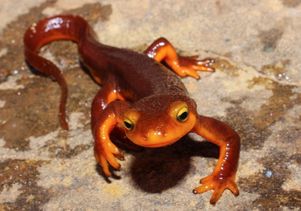
L.A.’s only species of newt is showing signs of severe distress, troubling researchers and raising questions about the impacts of the drought and climate change.
For more than 40 years, issues surrounding genetically modified organisms—GMOs—have been full of controversy, curiosity and confusion. On Tuesday, April 19, four experts will debate the environmental, social and health impacts of GMO foods.
Lee Cooper writes about how UCLA’s Sustainable LA Grand Challenge will leverage the university’s students to make Los Angeles energy and water independent.
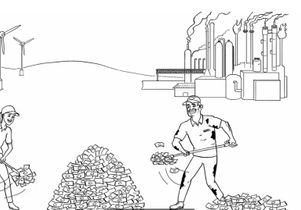
Measures put in place by the state have mitigated financial impacts that could be expected as costs passed along to electricity, natural gas and gasoline consumers.
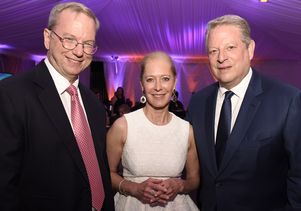
This year’s gala raised a record $1.75 million for UCLA’s environmental research, education and community projects and recognized Ted Sarandos, Wendy and Eric Schmidt, and Jeff Skoll.