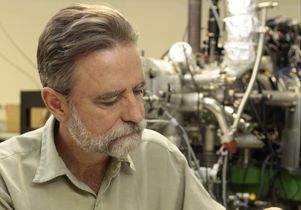
Eating local is good. All corporations are bad. Population growth is the problem. Peter Kareiva, director of the UCLA Institute of the Environment and Sustainability, implores people to question assertions like these.
Jon Christensen writes that to take these solutions from UC-wide to a global scale, we’ve got to start now using a combination of technology, outreach and policy.
UCLA environmental professors Magali Delmas and Susanna Hecht are among the climate experts, politicians and industry leaders gathering in San Diego today for a University of California climate change summit.
The particles are used in a wide range of consumer products for their ability to kill bacteria. But that benefit might be coming at a cost to the environment.
By combining never-before–released data from energy utilities with public data, UCLA researchers created a database that provides an unprecedented look at the energy-use landscape.
A “Thinking L.A.” event, jointly sponsored by UCLA and Zocálo at the RAND Corporation Tuesday evening, explored the roots of the fervor surrounding fracking in California.
The models predict that the area burned by Santa Ana fires will increase by 64 percent and the are burned by non-Santa Ana fires will increase by 77 percent.
At a "Thinking L.A." event co-hosted by UCLA and Zócalo, four panelists discussed the importance and difficulty of implementing desalination plants, water-recycling facilities and other tools to help California make better use of its water resources.
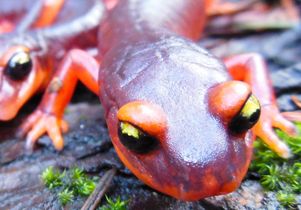
Researchers from the UCLA Institute of the Environment and Sustainability call for a federal ban on salamander imports to prevent a deadly pathogen from coming here.