UCLA’s MarySue Heilemann, who was a delegate to the United Nations Commission on the Status of Women, says the experience will influence her teaching and scholarship.
The UCLA study looks at differences in access to care, behaviors that negatively affect health and health problems that can result from those behaviors, based on people’s sexual orientation.
A pioneer in her field, Dr. Linda Liau is only the second woman in the nation — and the first Asian-American woman — to chair an academic department of neurosurgery.
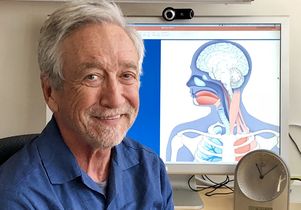
Neuroscientist Jack Feldman will explain the importance of the connections between breathing and the brain as he delivers UCLA’s 125th Faculty Research Lecture.
Iris Cantor-UCLA Women’s Health Center partners with other organizations to help Los Angeles-area women by bringing classes to locations convenient for them.
Researchers from the School of Dentistry and the David Geffen School of Medicine will use a technology created in the lab of Dr. David Wong from the dental school.
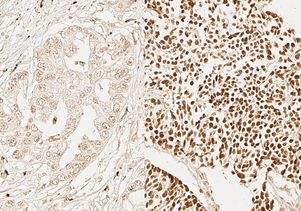
Previous research hinted that small cell cancers from different organs may be driven by common mechanisms, but the new study is the first to so clearly describe the steps in their evolution.
The gift from Louis and Harold Price Foundation will enable Dr. Daniel Lu, associate professor of neurosurgery, to test promising treatments, with the potential for groundbreaking therapies.
“Thanks to Iris [Cantor], generations of women have been empowered to take command of their health and inspired to get involved,” said medical school dean Kelsey Martin.
Research in a related report, however, found that a greater percentage of California adults are walking regularly: 4 in 5 adults regularly walk for transportation, for leisure or both.
Dr. Michael Rodriguez is founding chair of the group that focuses its energies on research, policy and advocacy work, sharing knowledge and promoting policies that encourage political, economic and social equality.
“With this type of measurement tool, you could potentially figure out which drugs would work best for each person before even starting treatment,” said UCLA professor Dino Di Carlo.
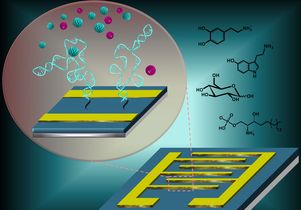
The idea for the project began 20 years ago, when UCLA professor Anne Andrews was researching serotonin and realized that the then-state-of-the-art methods for monitoring neurochemicals couldn’t provide data with sufficient quality.