In bright light, mammals rapidly recycle spent pigments via a process that ensures photoreceptors retain levels of light-sensitive pigments sufficient for uninterrupted sight.
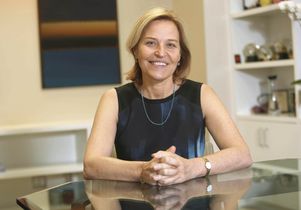
Dr. Kelsey Martin, who recently was elected to the National Academy of Medicine, is the first woman dean of UCLA’s medical school, and she is among only a handful of women leading a medical school in the United States.
The UCLA Stein Eye Institute marked its 50th anniversary and the reopening of the Jules Stein Building, recently renovated to create a state-of-the-art facility to advance UCLA’s work in the field of ophthalmology.
Less than half of individuals with peripheral artery disease, a narrowing of arteries to the limbs, stomach and head, are treated with appropriate medications and lifestyle counseling. These findings highlight the need to improve care.
Nearly half of adults who had been employed before experiencing and surviving acute respiratory distress syndrome were jobless one year after hospital discharge.
Sam Emaminejad, assistant professor of electrical engineering at UCLA, has demonstrated that a wearable biosensor can be used in the diagnosis of cystic fibrosis, diabetes and other diseases.
The findings by UCLA researchers could help scientists replicate or control the way axons grow, which could be applicable for diseases that affect the nervous system.
Paradoxically, the strong relationship between stress level and the tendency to forget course material was most prevalent among students who are most confident in their own mathematical abilities.
Offering an eye exam for people with diabetes in a primary care setting in addition to eye clinics dramatically reduced the length of time people had to wait for the test.
In recent years, a lively debate over the pros and cons of the annual physical exam for boomers and others have appeared in major medical journals. Opinions have been mixed.
In October 2016, Jonathan Koch, a 51-year-old entertainment executive from Los Angeles, underwent a 17-hour procedure to replace the hand he lost to a mysterious, life-threatening illness.
Physicians working in hospitals may be more likely to refer patients for certain types of follow-up care because they’re more immediately accessible and convenient, said UCLA’s Dr. John Mafi.