Psychiatry professor Marco Iacoboni writes about the role empathy-generating mirror neurons play in creating feelings of community in our collective sports fandom.
The initiative will train a new generation to help achieve a set of ambitious U.N.-approved goals to reduce poverty and hunger, improve health, advance education and make cities more sustainable.
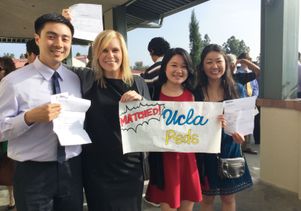
Pandemonium broke out today, Match Day, on the terrace at Covel Commons when 165 medical students from the David Geffen School of Medicine at UCLA ripped open envelopes to find out where they have been accepted for residency.
By temporarily inactivating a part of the brain involved in impulse control, the researchers discovered compelling evidence that humans are predisposed to be generous to others.
More than 1 in 9 people around the world do not have access to safe, clean drinking water, and the problem is expected to worsen due in part to climate change.
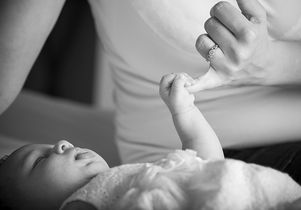
Three physicians write about how a determination to breast feed pushed even them to ignore their own advice for new mothers that breastfeeding at all costs might not be the right choice.
Statement on behalf of the UCLA community from Chancellor Gene Block and Dr. John Mazziotta, Vice Chancellor, UCLA Health Sciences, and CEO of UCLA Health.
The results presented in a new study by researchers at UCLA and in Brazil Zika revealed associations between infection and “grave outcomes” including fetal death, fetal growth restriction and nervous system damage.
The findings are particularly important because of the emergence of community-acquired MRSA, which since 2000 has become the most common cause of skin infections.
A UCLA psychology study concludes that many people believe gay men and women are more sexually promiscuous, which they may fear threatens their own marriages and their way of life.
A new training program is teaching pediatric residents how to balance their passion for helping children and families with the difficult realities of their profession.
Students in UCLA’s Specialty Training and Advanced Research Program pursue their Ph.D. after finishing medical school, which maintains close ties between clinical education and research training.
The study’s lead author says the findings “have the potential to dramatically decrease the number of undetected cases of Type 2 diabetes, prevent complications from the disease and save lives.”