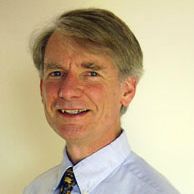
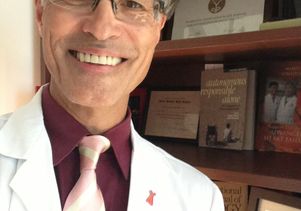
William J. McCarthy, UCLA adjunct professor of public health, writes about the failed experiment to improve on Mother Nature’s options for fatty food by using “healthier” trans fat.
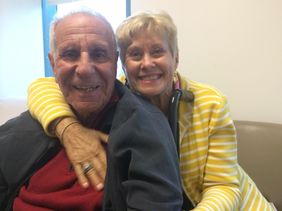
Extracorporeal membrane oxygenation is normally reserved for transplant recipients, but quick-thinking hospital staff used it on James Manzi, who looks forward to 80th birthday April 6.
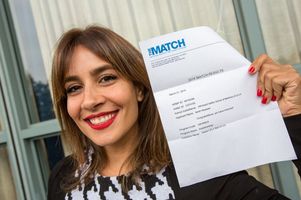
Friday was the day when U.S. medical students rip open envelopes and learn where they’ve been accepted for residency, the next phase of their training as physicians.
Longtime UCLA supporters Lynda and Stewart Resnick have made pledges totaling $4 million to campus programs in medicine, law and art as part of the Bruin Scholars Initiative.
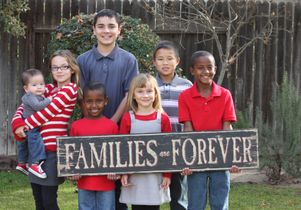
With thousands of adopted children arriving in the U.S. each year, the International Adoption and Travel Clinic provides reviews of potential adoptees' health records, medical assessments and other support services.
More than 10 years after the battle began with community-acquired methicillin-resistant Staphylococcus aureus, clinicians are still grappling with how to treat and prevent it.
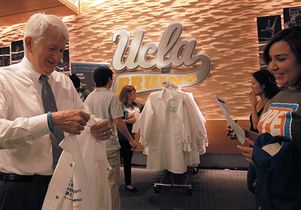
More than 4,000 UCLA researchers, staff and student lab personnel picked up lab coats, eyewear and other protective gear during a weeklong event in the Pauley Pavilion Club Room.
UCLA researchers have confirmed the spider-like metastatic activity of melanoma cells outside the bloodstream and shown that ultraviolet radiation makes them more efficient and deadly.
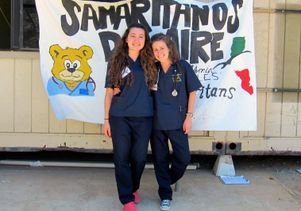
Becky Barber and Lyolya Hovhannisyan founded the UCLA chapter of Flying Samaritans in 2013. With volunteer doctors and other students, they bring quality medical care to Tijuana's Colonia Margarita Moran.
Even those who had smoked for only a short time showed thinning of the insula, a part of the brain involved in monitoring internal states and making decisions.
The results, published in the New England Journal of Medicine, show that the use of lymphatic mapping and sentinel-node biopsy have been a significant advance in the treatment of melanoma.
Higher temperatures and less rain are likely to lead to more infections in humans in the future, with the disease spreading north into previously unaffected areas as a result of climate change.
The findings of a new UCLA-led study could lead to a cost-effective way to make antivirals safer, which is particularly important in resource-poor countries where deadly viruses run rampant.
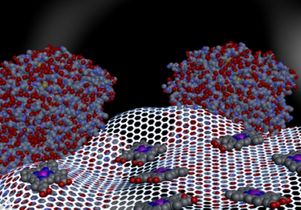
Light-activated drug delivery holds promise for treating cancer because it give doctors control over precisely when and where in the body drugs are released.
Using a robotic surgical technique to excise the prostate appears to improve cancer-cell removal and reduce the need for additional post-surgery cancer therapies.
The University of California announced today that it has reached a tentative agreement with the American Federation of State, County and Municipal Employees for a four-year contract covering more than 8,300 service workers. AFSCME agreed to call off its five-day strike scheduled for March 3-7 at UC campuses and medical centers.
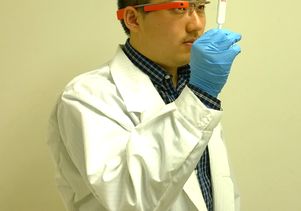
Users of the wearable computers can take pictures of medical samples, upload them immediately to a server and receive accurate analyses in as little as eight seconds.
University of California researchers have released two reports that indicate high need and potential for health coverage among undocumented teens and young adults in California.
Tracking HIV incidence and drug-related behaviors on social media could help researchers detect and potentially prevent outbreaks, a new UCLA-led study shows.
Using an existing drug and a new drug developed at UCLA, the researchers eradicated cancer cells in mice with a deadly type of blood cancer, leaving healthy blood cells alone. The treatment might also have applications for other blood diseases.
Scientists say children of mothers who used the medication while pregnant were up to 37 percent more likely to be diagnosed with hyperkinetic disorder, receive medication for ADHD or display ADHD symptoms.
The AlloMap test, which measures changes in gene expression, can be used to assess the risk of rejection of a transplanted heart months before such an event may occur.