A study led by UCLA's Dr. Gregg Fonarow found that hospitals recognized by the national Get With The Guildelines program showed greater achievement than others.
An analysis method developed by UCLA's Raphael Levine allows scientists to look at how cancer cells use energy when expressing critical genes that allow them grow.
Led by Dr. David Wong, UCLA researchers confirmed that biomarkers for pancreatic cancer reside in saliva. The findings could be a major step toward a simple new risk assessment test for the disease.
The Galaxy Health program, designed jointly by UCLA and USC, debuted at Los Angeles County+USC Medical Center in 2012 and has demonstrated the benefit of intuitive and inexpensive health care interventions.
Later in life, persons with the 22q11.2 deletion are at an increased risk of developing severe psychopathology, particularly schizophrenia, as well as depression and anxiety disorder.
UCLA researchers found that the drug stimulated receptors in CD4 T cells that allowed these immune cells to be infected, leading to new production of the virus.
A grant of $12 million from the NIH recognizes the UC's potential to translate leading-edge discoveries into innovative products that benefit patients.
Mice fed a fatty diet gained more than twice as much as other mice and were far more likely to develop pancreatic lesions known to be precursors to cancer.
The effects of childhood abuse and a lack of parental affection can last a lifetime, taking a toll both emotionally and physically, UCLA researchers say.
The new Teaching and Learning Center will bring medical instruction into the 21st century, with a focus on cutting-edge technologies and innovative teaching methods.
In a clinical trial, patients whose doctors were given access to early brain scans showed better executive function, memory and overall cognitive ability over a two-year period.
When Terry Dunlap arrived at the ER with a massive clot, doctors gave him two choices: open-heart surgery or a new minimally invasive procedure. But there was a catch.
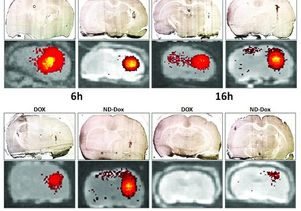
UCLA researchers found that by attaching drugs to the tiny particles and injecting them directly into tumors, the drugs' efficiency was boosted and damage to surrounding tissue was minimized.
An Institute of Medicine committee chaired by UCLA's Patricia Ganz says urgent changes are needed to improve cancer care as baby boomers age and new therapies arise.
The UCLA-RAND study found that one of every 10 patients in the ICU received care that wouldn't improve or save their lives, at a cost of approximately $4,000 a day.
The new type of IBS, which follows a bout of diverticulitis, may help scientists get closer to the causes of the condition. "It's such a common condition, and there may be different flavors," they say.
By engaging at-risk men in Facebook discussion groups, researchers saw a boost in HIV awareness and prevention. The approach, they said, could work for other diseases as well.
Difficulty swallowing is a common side effect of radiation treatment, but a UCLA study shows that following a regimen of swallowing exercises can significantly minimize the problem.
As a sports fan with expertise in biomechanical engineering, UCLA professor Vijay Gupta marvels at the efficient, effective way the human body is built. But the head wasn’t designed to withstand the shockwaves resulting from a collision with a 250-pound football player wearing a helmet.