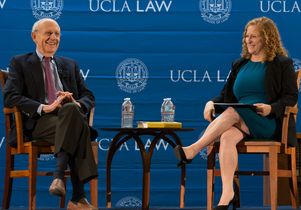
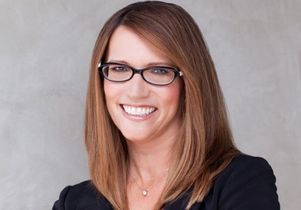
Breyer joined School of Law Dean Jennifer Mnookin in a discussion about the law, the Supreme Court and also his new book “The Court and The World: American Law and the New Global Realities.”
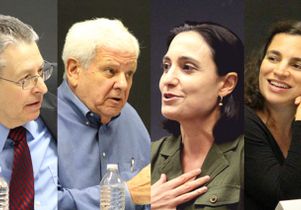
The much-debated nuclear agreement with Iran is now a fact and should be given a chance to work, a panel of experts from UCLA and the RAND Corporation said during a discussion that drew a packed crowd to a lecture hall in Bunche Hall recently.
The UCLA Asian American Studies Center has launched the Suyama Project to gather and make available online evidence of resistance among Japanese Americans forcibly removed from their homes during World War II.
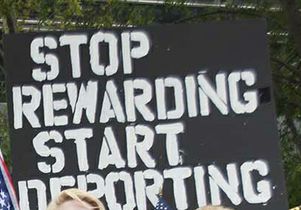
Professor Carola Suárez-Orozco and Dean Marcelo Suárez-Orozco write in an op-ed about how Donald Trump-style immigration rhetoric hurts immigrant children and the children of immigrants.
UCLA Anderson lecturer Paul Habibi says creating an enhanced infrastructure financing district can promote development that spurs economic growth, protects the environment and ensures affordable housing.
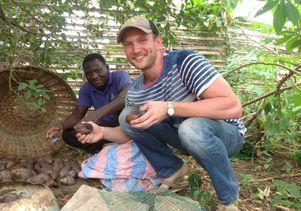
Thanks to UCLA student Grant Guess, schoolchildren with developmental and intellectual disabilities in West Africa are reaping the benefits of working on sustainable farm projects that he has developed for them.
The models predict that the area burned by Santa Ana fires will increase by 64 percent and the are burned by non-Santa Ana fires will increase by 77 percent.
Even if union workers are exempted from the city’s forthcoming minimum wage increase, study predicts, there would be minimal short-term impact on their salaries.
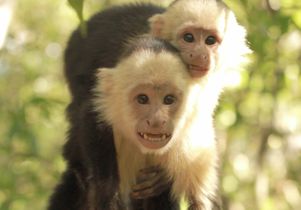
Anthropologist Susan Perry has observed extraordinarily sophisticated political strategies in capuchin monkey behavior that mirror the social machinations so common in human workplaces.
UCLA Anderson professor Jerry Nickelsburg writes that market forces have elevated food safety to an overriding concern in agricultural trade between China and the United States.
Men who buy sex have less empathy for women in prostitution than men who don’t buy sex, and they are more likely to report having committed rape and other acts of sexual aggression.
Nearly 1 in 5 older adults in California live in an economic no-man’s land, unable to afford basic needs, according to a study by the UCLA Center of Health Policy Research.
Political science professor Lynn Vavreck writes that Donald Trump’s rise is just the latest version of a candidate assuming an early lead that has no assurance of leading to the nomination.
UCLA Anderson Forecast economist William Yu writes in the Los Angeles Times that examining real estate data patterns shows that L.A. is not on the verge of a crash in home prices.
Expanding density incentives, streamlining site plan review and altering financing rules are three key ways to create more affordable housing, Paul Habibi writes in the Los Angeles Times.
Sociologist Edward T. Walker writes in the New York Times that rich corporations are leveraging social media to get customers and ordinary citizens to act as de facto lobbyists.
On the 50th anniversary of the Watts riots, historian Robin D.G. Kelley writes in the L.A. Times that the era gave birth to social justice and arts organizations that remade the community and whose legacy continues today.
Political science professor Lynn Vavreck writes in the New York Times that endorsements for the 2016 GOP presidential nomination have been few so far because of a lack of a consensus pick among party elites.
Public health professor Roshan Bastani, director of UCLA’s Kaiser Permanente Center for Health Equity, joined a panel of health experts at a Zócalo event to discuss how to help low-income families stay healthy.
In California, where bilingual instruction is largely prohibited, secondary students who don’t speak English quickly fall behind. But a project to create a bilingual online curriculum is being led by UCLA professor Patricia Gándara.
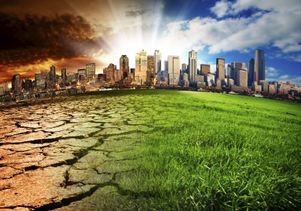
The UCLA Center for World Health and the LA5 Rotary Club brought together a panel of experts to talk about the failing health of the Earth and what mega-cities can do about it before an audience of 200 business peoplein downtown Los Angeles.
Researchers at the UCLA Institute of the Environment and Sustainability recommend that state officials adopt best practices for monitoring leaks and measuring water loss.
History professor Brenda Stevenson writes that 150 years after emancipation in the United States, there are still 20 to 30 million people enslaved around the world.