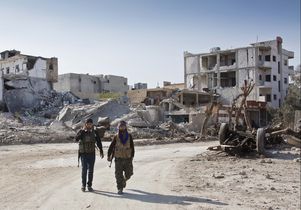
History professor James Gelvin writes that the chances for negotiating a settlement in Syria might increase if the different players stopped examining the conflict in isolation.
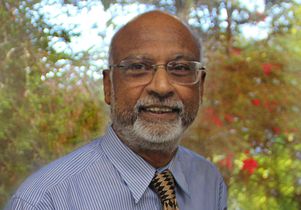
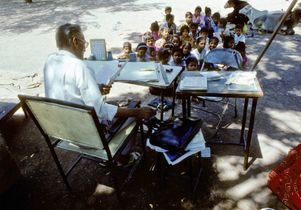
Lokubanda Tillakaratne has spent more than three decades helping his former village in many different ways. Now he's published a book of facts, figures, interviews and personal recollections of life there.
Using UCLA environmental research, the Los Angeles City Council passed a motion to develop a program to improve energy and water conservation efforts in city buildings that consume the most resources.
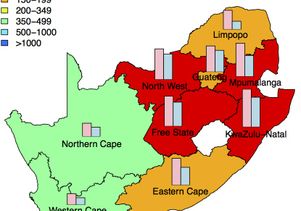
Researchers at UCLA have devised a plan they say would be much more effective in reducing HIV transmission than simply trying to distribute antiretroviral drugs to as many people as possible.
Faculty at the UCLA Fielding School of Public Health are working to determine why immigrants in the United States become unhealthier the longer they live in the country and promote solutions.
For more than 20 years, professor David Gere of the Department of World Arts and Cultures has been using art and a network of artists to communicate his message about ending the AIDS epidemic around the world. Are we any closer to making that happen?
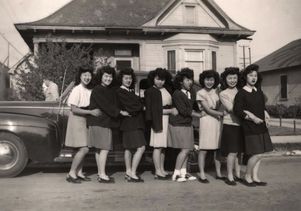
UCLA history professor Valerie J. Matsumoto looks at the social clubs that gave Japanese-Americans a chance to socialize, develop leadership skills and participate in community service.
Researchers assessed 190 U.N. countries’ progress toward fulfilling their commitments to the right to education, protection from child labor and child marriage, and discrimination against children with disabilities.
Teachers in high-poverty schools are more likely than their peers in low-poverty schools to report instructional time that's lost due to poor access to libraries, technology and qualified substitute teachers, a new study by the UCLA Institute for Democracy, Education and Access found.
Elizabeth Pratt, who is working toward earning a master’s degree in public policy concurrently with her M.B.A. at the UCLA Anderson School, is one of three Anderson student recipients of the 2014 John Wooden Global Leadership Fellowship.
Robin D.G. Kelley, distinguished professor of history at UCLA, served as a consultant on the new documentary "Through a Lens Darkly: Black Photographers and the Emergence of a People."
A UCLA study has found a trend at colleges toward teaching practices such as class discussions and group learning and away from lectures and other teacher-centered styles.
For 20 years master’s students in the social welfare program have learned firsthand about homelessness by going to downtown Los Angeles. Some never left.
Los Angeles Mayor Eric Garcetti will escort a delegation of Los Angeles leaders to China to attend a Nov. 19 ceremony celebrating UCLA Health’s partnership with Centre Testing International on an advanced medical laboratory in Shanghai.
Year-round program aims to introduce entrepreneurship as a viable career path and foster entrepreneurial skills through individualized coaching, mentoring and business development.
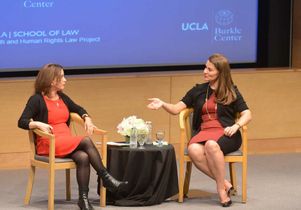
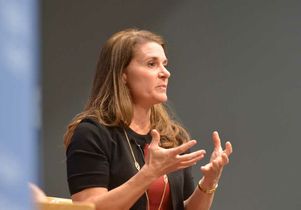
The Bill and Melinda Gates Foundation is betting big on women and girls to help developing countries lift themselves out of poverty, foundation co-chair Melinda Gates told a UCLA audience that filled Korn Convocation Hall on Nov. 5.
On the 25th anniversary of the adoption of the Convention on the Rights of the Child, Dr. Jody Heymann, dean of the UCLA Fielding School of Public Health and founding director of the WORLD Policy Analysis Center, and co-authors Kristen Savage and Aleta Sprague examine the progress made toward securing children’s rights around the world.
The world has backed away from supporting contraception in the developing world because of politics, said the co-chair of the Bill and Melinda Gates Foundation.
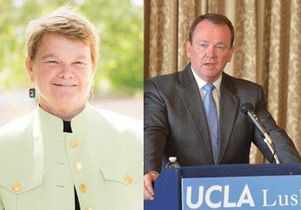
For over 15 years, the Senior Fellows Leadership Program has been helping to prepare UCLA Luskin School of Public Affairs students for careers as change agents in the world by pairing them with leaders in their fields as mentors.
Two scholars — one from UCLA and another from Chapman University — discuss the importance of train transportation in L.A.'s history and whether or not rail will play an integral role in the city's future.
UCLA professor Lynn Vavreck writes in The New York Times that if the Democrats lose the Senate, it would follow recent electoral history for the party of an unpopular president. Also, watch a video of Vavreck speaking about political TV ads.
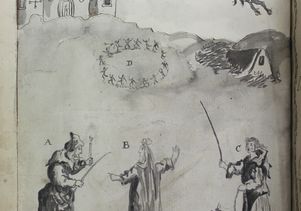
UCLA’s William Andrews Clark Memorial Library urges you to consult a 1665 treatise on the seven signs that witchcraft or necromancy is behind your ailments.