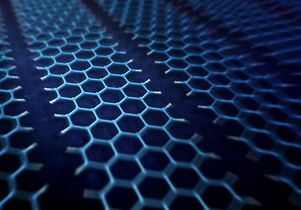
In experiments the device produced 30 percent better capacitance — the measure of a device’s ability to store an electric charge — for its mass compared to the best available electrode made from similar materials.
UCLA professor of musicology David MacFadyen is a champion of blockchain and how it could influence the future study and scholarship in arts and literature.
UCLA is tied for third in the number of people honored this year by the Alfred P. Sloan Foundation, which selects early-career scientists who are rising stars of science.
Their technique would enable an average biochemistry laboratory to make its own sequences for only about $2 per gene, far less than the $50 to $100 per gene commercial vendors charge.
Hong shares what it was like to run a leg in the torch relay for the 2018 Winter Olympics in Pyeongchang, South Korea, and the future of robot athletics.
UCLA’s Jane Margolis and Julie Flapan use research to help policymakers devise equitable and effective strategies to scale up diversity in computer science.
Q&A with UCLA’s Sarah T. Roberts about seeing the subject of her work — the study of people who keep the internet “clean” — on screen in “The Cleaners.”
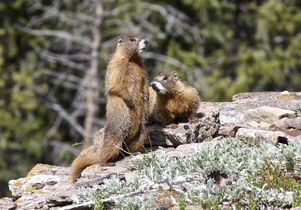
Yellow-bellied marmots live much longer, on average, if they are less social and more isolated than if they are more social and less isolated, a UCLA-led study has found.
UCLA research published in the journal Proceedings of the National Academy of Sciences is the first proof that a single material can be both static and moving.
Each is among 14 scientists nationally to be named by the Howard Hughes Medical Institute as HHMI professors. UCLA is tied for second in the number of 2017 recipients.
UCLA researchers discovered that, when heart muscle cells were mixed with high levels of glucose, they matured late or failed to mature altogether, and instead generated more immature cells.
The new technique sheds light on the materials the artist used, and the order in which they were applied to the painting. It also helped scientists uncover insights about the painting’s connections to other work from the same era.
As electronic devices have become smaller, using silicon components to power them has become more challenging; a team of faculty and students has developed a promising solution.
Scientists using a state-of-the-art UCLA instrument have witnessed a planetary-scale “tug-of-war” of life, deep Earth and the upper atmosphere that is expressed in atmospheric nitrogen.