Teams of UCLA students, staff and faculty who have created clever, first-of-their-kind software and applications that use the latest technologies to help solve problems unveiled the result of thousands of hours of hard work Thursday at a campus conference.
The least developed human embryonic stem cells, or “naïve” pluripotent stem cells, consume more sugar than “primed” pluripotent stem cells, which are embryonic stem cells from later in development, researchers have discovered.
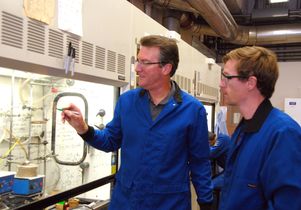
Craig Merlic, an associate professor of chemistry at UCLA, has been committed to laboratory safety for three decades. He serves as the executive director of the UC Center for Laboratory Safety.
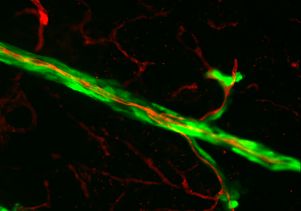
The findings are a major step toward confirming an unusual theory of how some cancer cells metastasize, and the study could lead to new strategies for keeping melanoma from spreading.
More than 300 technology leaders, innovators, policymakers, journalists and academics will gather Friday at UCLA’s Pauley Pavilion Club to share their ideas on closing the gender and diversity gap in the technology sector.
The new head of the Office of Intellectual Property and Industry Sponsored Research, and of Westwood Technology Transfer, was previously with Israel’s Weizman Institute of Science.
UCLA professor Blaire Van Valkenburgh said the animals in question “are all that is left of a once much more diverse megafauna that populated the planet only 12,000 years ago.”
Twenty-eight outstanding undergraduates from across the country are spending eight weeks at UCLA, learning the latest data analysis techniques and skills that are transforming the biosciences.
A team of scientists including researchers from UCLA has developed an RNA sequencing technique that could advance scientists’ use of stem cells in regenerative medicine.
Scientists at the UCLA Eli and Edythe Broad Center of Regenerative Medicine and Stem Cell Research have discovered that a certain metabolic molecule helps pluripotent stem cells mature faster.
UCLA biologists have found genetic evidence that supports keeping the gray wolf protected by the U.S. Fish and Wildlife Service, which might rule this fall to remove it from the endangered list.
The research could improve scientists’ ability to understand health care, economics and the environment, and to glean much more pertinent insight from data.
Researchers have identified mechanisms that determine how the deadliest form of skin cancer can become resistant to immune checkpoint inhibitors, which could lead to the development of new treatments.