Terahertz waves can be used to analyze plastics, clothing, semiconductors and works of art without damaging them and to investigate the formation of stars, among other applications.
With help from faculty and students at UCLA and Waseda University in Tokyo, UCLA professor Michael Emmerich has developed and launched an app to teach students to read premodern calligraphy used in classical Japanese texts.
Logic would suggest that millions of years of evolution would have perfected spatial localization in humans. A new UCLA study helps explain why that’s not the case.
The study, by researchers at the California NanoSystems Institute, could be an important step in the effort to satisfy the world’s need for clean water.
Archaeologist Matthew Curtis was part of a team that recently discovered a skeleton that yielded the first complete ancient genome ever found in Africa.
A sold-out crowd at UCLA’s IDEAS campus got a visionary glimpse into the future of space exploration Friday at the first of a series of events hosted by FuturizeX, a campuswide initiative being launched by UCLA and XPRIZE.
For the last 18 years, UCLA’s Lisa Snyder has been bringing to life the bygone glory of a true architectural, social and cultural wonder — the Chicago World’s Fair.
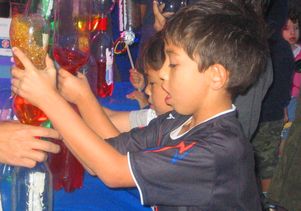
Guests can launch a rocket, take a peek at planets outside our solar system, make a cloud in a bottle and get up close and personal with dinosaur fossils and meteorites.
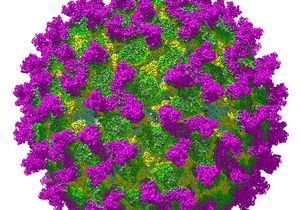
UCLA research reveals the three-dimensional atomic structure of a double-stranded RNA virus and the biological nano-switch that turns on transcription.
UCLA’s Seulgi Moon and her colleagues devised a mathematical model that estimates the amount of stress bedrock is under, which will enable scientists to predict where fractures may occur.
Life scientists from UCLA and other universities in the U.S. and England argue that predatory animals helped keep the population of large herbivores in check.
Using Broad Stem Cell Research Center’s cell isolation and genetic sequencing technologies and sophisticated bioinformatics, scientists identify elusive LncRNA genes.