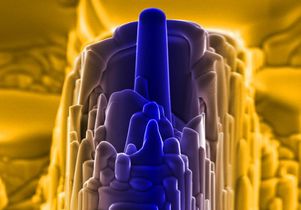
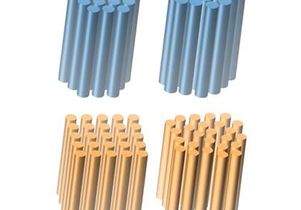
The new ceramics hold promise for use in miniature mechanical components and flexible-yet-strong foils for use in solar sails, which are used to propel spacecraft, among many other applications.
Researchers from UCLA and the Jet Propulsion Laboratory found that extra heat from greenhouse gases has been trapped in the subsurface waters of the Pacific and Indian oceans.
Scientists from UCLA and City of Hope have become the first to inhibit the mechanism of a protein that regulates a key process that causes cancer to grow.
The findings strongly suggest that stem cell-based gene therapy with a chimeric antigen receptor may be an effective treatment for chronic HIV infection in humans.
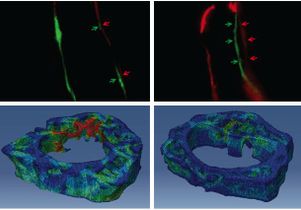
Results could one day have an impact on the development of a treatment for osteoporosis as well as potentially help those with traumatic bone injuries.
Better mentorship, revised performance reviews and more transparency are among the recommendations shared at a recent UCLA conference that attempted to figure out how to increase the number of women in tech.
The three-year project aims to fill critical gaps in knowledge about concussion and translate research findings into new safety guidelines for the more than 450,000 U.S. collegiate student-athletes.
A new technology developed by chemists at UCLA is capable of storing solar energy for up to several weeks — an advance that could redefine the way scientists approach solar cell design.
Braving floods, fires and vampire mosquitoes, UCLA professor Susan Perry has spent 25 years chasing capuchin monkeys through the forests of Costa Rica. Her data have transformed what we know about these fascinating primates.
NASA’s Dawn mission is observing the dwarf planet Ceres from 2,700 miles above its surface; the space agency has released new images and a video animation.
A new event created by the Ozcan Research Group of UCLA’s Henry Samueli School of Engineering and Applied Science showcased an impressive array of biomedical engineering technology research.
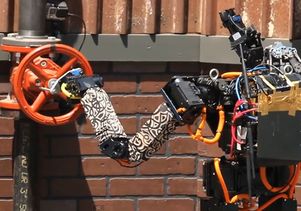
UCLA robotics expert Dennis Hong and a team of students competed with THOR, their humanoid robot, in a contest to build a robot that can go places too dangerous for humans.