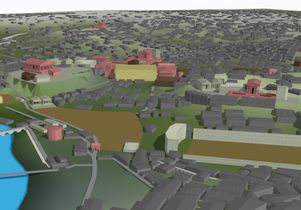
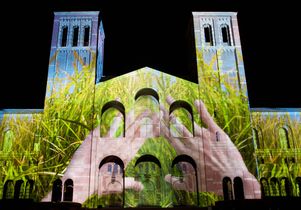
Intrigued by the question of whether Augustus Caesar transformed Rome from a city of bricks into a city of marble, as legend has it, UCLA professor Diane Favro decided to use advanced modeling software to reconstruct Rome at the time of his reign.
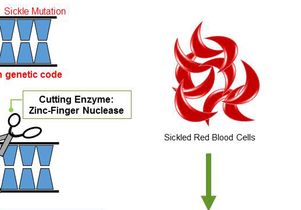
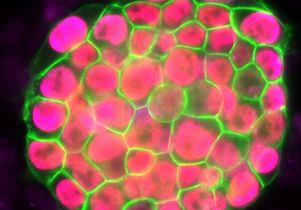
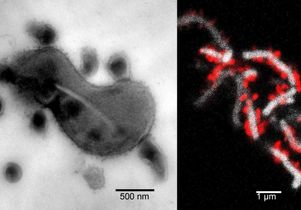
Life scientists have created an accurate new method to identify markers for many diseases — a significant step toward a new era of personalized medicine, tailored to each person’s DNA and RNA.
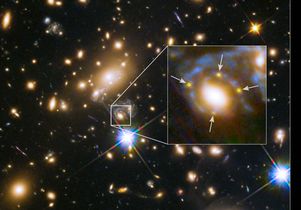
Most of the laws of nature treat particles and antiparticles equally, but stars and planets are made of particles, or matter, and not antiparticles, or antimatter. That asymmetry puzzled scientists for many years.
Screening travelers for fever on arrival has been criticized as ineffective, but the scientists found it can catch cases that screeners miss at departure.
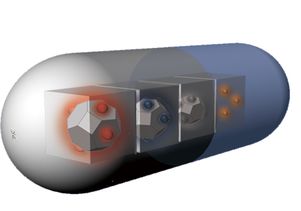
UCLA bioengineers have developed a revolutionary approach that brings together traditional drugs and nanotechnology-enhanced medications to create safer and more effective treatments.
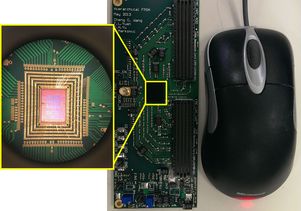
Two engineering graduates are the first employees in a new Mountain View startup that will use their innovation in the design of an important semiconductor chip.
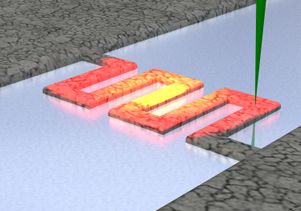
Researchers developed a thermal imaging technique that can “see” how the temperature changes from point to point inside the smallest electronic circuits.
Darwin’s writings focused much more on species that had changed over time than on those that hadn’t. So how do scientists explain a species living for so long without evolving?
A team led by engineers from UCLA and Columbia University controlled light at tiny lengths around 500 nanometers — smaller than the light’s own wavelength — by using random crystal lattice structures.
A team of life scientists has found part of the answer: The amount and intensity of striping in different zebra populations can be best predicted by temperature.
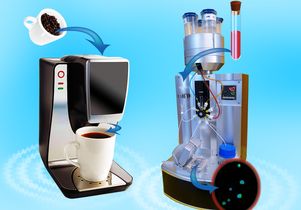
A team led by researchers at the California NanoSystems Institute developed a new method for extracting and analyzing cancer cells circulating in patients’ blood.
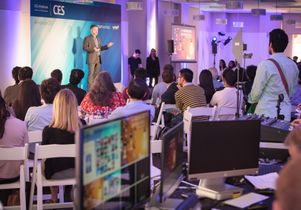
UCLA students as well as tech lovers and industry entrepreneurs came together Thursday to learn about and discuss the latest developments in wearable devices, virtual reality, robotics, connected cars and the Internet of Things at UCLA Anderson’s inaugural Consumer Electronics Show.
The online master’s degree program at the UCLA Henry Samueli School of Engineering and Applied Science has been named the best in the country by U.S. News and World Report.
Padmanabhan’s support of the lab, which will be housed in the still-under-construction Engineering VI building, will further cement UCLA as a premiere research institution.
The year 2014 featured the debut of a multi-year fundraising campaign, research breakthroughs, stunning achievements by students and faculty — and an unexpected flood that impacted the campus for months. We call that a momentous year.
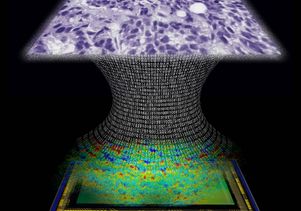
UCLA researchers led by Aydogan Ozcan have developed a lens-free microscope that can be used to detect cancer with the same accuracy as larger and more expensive optical microscopes.
A new research institute at UCLA may eventually provide doctors with tools to more accurately tailor therapies to patients, which would improve care and minimize side effects.
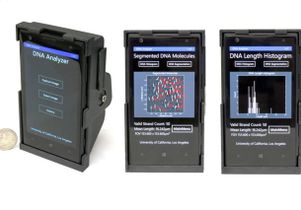
Researchers from UCLA have developed the first lightweight, compact device that converts an ordinary smartphone into an advanced fluorescence microscope.