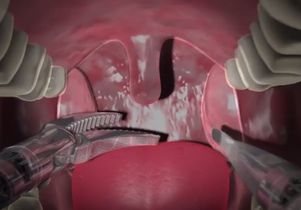
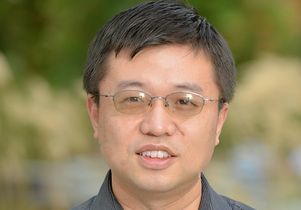
UCLA’s Edward Garon, the study’s principal investigator, says the drug offers new hope for people with lung cancer who often have few treatment options.
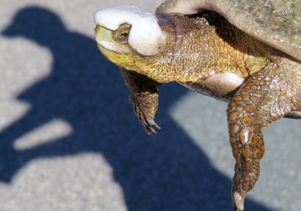
Biologists with the UCLA La Kretz Center for California Conservation Science recently went on a rescue mission to save endangered turtles that have become dehydrated, emaciated and stressed-out by the extended drought.
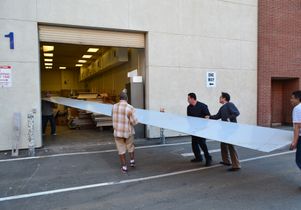
A 28-foot-long elevator from an Airbus A330 was donated to the UCLA Henry Samueli School of Engineering and Applied Science. The part, which is used for flight control on the aircraft’s tail, is valued at $750,000.
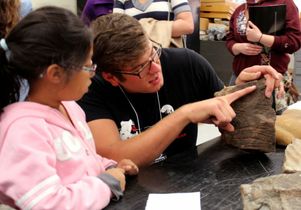
Alan Rubin, the associate curator of the UCLA Meteorite Gallery and unofficial “cosmic killjoy,” regularly has to tell people the answer is no. But he'll also tell you where meteorites actually come from.
Scientists from UCLA, Harvard, Mass General and Stanford present strong evidence that a chemical modification on RNA plays a key role in determining embryonic stem cells’ ability to adopt different cellular identities.
UCLA scientists say this could lead to a better understanding of stem cell signaling and the immune system response, paving the way for new and more effective therapies.
From poultry to pies and sugar to soil, UC scientists are uncovering insights across the food spectrum that can make your holidays healthier, happier and more mindful.
New findings by UCLA neurophysicists could be significant for people who use virtual reality for gaming, military, commercial, scientific or other purposes.
Company emerges from King Abdulaziz City for Science and Technology and the UCLA Center for Excellence in Green Technology. It aims to revolutionize electronics by using carbon-based nanomaterials to lower power consumption and improve performance of smartphones and wearable devices.
A team of UCLA researchers have been awarded 83 million core hours of computing time on one of the world’s fastest supercomputers to study the origins and evolution of the Earth’s magnetic field.
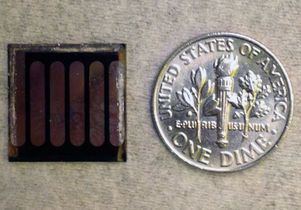
UCLA researchers find that using a perovskite solution could improve the quality and manufacturing efficiency of medical and commercial imaging devices.
Eighteen children with SCID have been cured of the disease after receiving the therapy in clinical trials at UCLA and the National Institutes of Health.
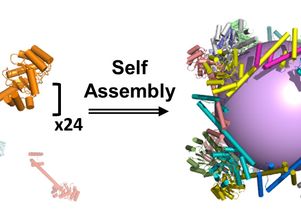
The scientists created the largest protein ever that self-assembles into a molecular “cage.” The protein is hundreds of times smaller than a human cell.
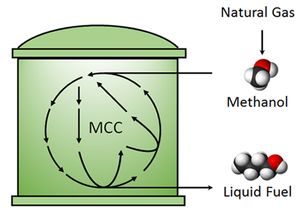
Researchers at UCLA have developed a more efficient way to turn methanol into useful chemicals, like liquid fuels, that would lower production costs in addition to reducing emission of the greenhouse gas.
Plants worldwide are more sensitive to drought than many scientists realized. The research may improve predictions of which plant species will survive climate change.
UCLA will host its free, annual “Exploring Your Universe” event — UCLA’s day for the public to learn about science — this Sunday, Nov. 16, from 12 noon until 5 p.m., with some activities continuing until 8 p.m., weather permitting.
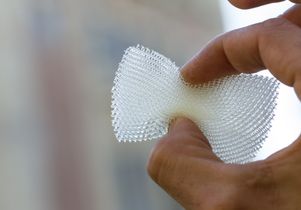
Researchers from UCLA and Architected Materials will use the grant to continue developing breakthrough technology to reduce the frequency and severity of head injuries to football players.
In a day-long event, renowned scientists will highlight and celebrate the monumental contributions of Wallace, at one time the most famous scientist in the world.
The technique, developed by researchers from UCLA and the Department of Energy’s SLAC National Accelerator Laboratory, shows promise in powering the next generation of particle accelerators.
Scientists explained the bizarre object in the center of the Milky Way that some astronomers believed was a hydrogen gas cloud headed toward our galaxy’s enormous black hole.