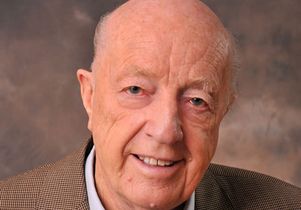
The institute will provide new knowledge and technology to assess and manage risks in order to save lives, protect the environment and protect property from large-scale threats.
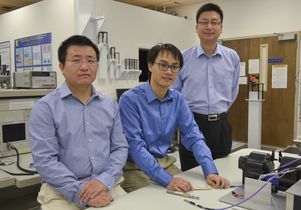
The technology, which could be used in smartphones and other wireless devices, would reduce demand on the radio spectrum without compromising quality or speed of communications.
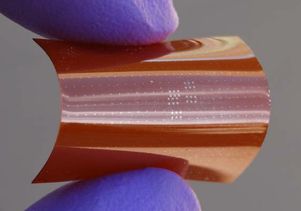
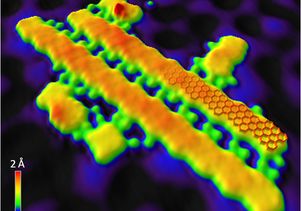
With their special electronic and optical properties, nanomaterials such as graphene and molybdenum sulfide have created excitement among scientists for their potential to revolutionize transistors and circuits.
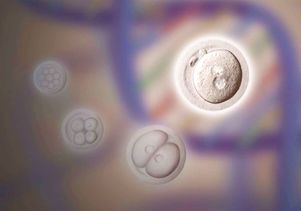
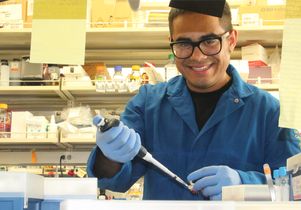
The findings could eventually lead to radiation and chemotherapy treatments that are more effective for people with cancer and other blood-related diseases.
SACNAS at UCLA is trying to bring more Latinos and Native Americans into science and engineering, a crucial step to help the U.S. keep pace with the rest of the technological world.
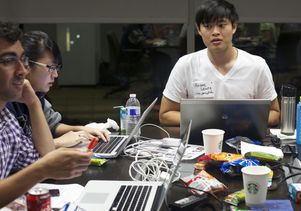
The second-annual Inventathon encourages interdisciplinary teams of young inventors to develop innovative solutions using the latest technology and mobile applications.
The $2.3 million National Institutes of Health awards go to scientists from the Eli and Edythe Broad Center of Regenerative Medicine and Stem Cell Research at UCLA for work in stem cells and neuroscience in medicine.
UCLA will create analytic tools to address the daunting challenges facing researchers in accessing, standardizing and sharing scientific data to foster new discoveries in medicine.
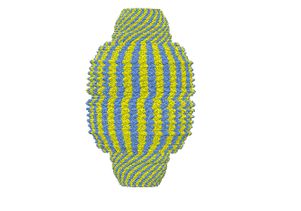
Developed by UCLA’s Dr. Leonard Rome and Dr. Steven Dubinett, the treatment combines an immunotherapy agent with a drug delivery nanotechnology using nanoparticles called vaults.
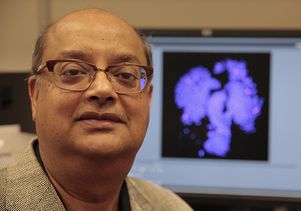
Utpal Banerjee, the Irving and Jean Stone Professor and chair of UCLA’s Department of Molecular, Cell and Developmental Biology in the UCLA College, will look at the important role of the fruit fly in helping scientists answer core questions about developmental biology.
Research by UCLA biochemists may lead to a new treatment — or even a cure — for a rare kidney disease that afflicts children, and may provide insights into treatments for Parkinson’s, Alzheimer’s and other degenerative diseases.
Report by the Climate Change and Business Research Initiative at the UCLA and UC Berkeley law schools suggests that used electric vehicle batteries may be a promising solution to California's search for cheap energy storage.
Buffets of highly processed foods like sugar and flour are as tempting to rats as they are to humans and eating lots of this food weakens cues to stop eating when full.
Researchers identified a gene called AMPK that can slow the aging process throughout the entire body when switched on in key organ systems. Activating the gene in fruit flies extended the animals’ lifespans by about 30 percent.
UCLA will host universities and technology companies who are working to promote the development and adoption of Named Data Networking, an emerging Internet architecture.
Two UCLA engineering professors say that it's crucial for engineers to understand the hazards that threaten our levees to ensure that California's fresh water delivery system remains protected in the future.
Willeke Wendrich first developed an interest in ancient Egyptian archaeology as a 20-year-old undergraduate student. Now an esteemed faculty member in UCLA’s Department of Near Eastern Languages and Cultures, she’s made a career out of her lifelong passion
Stanley Osher, UCLA professor of mathematics and director of applied mathematics, is the third person ever to receive the prestigious Gauss Prize, the highest honor in applied mathematics.
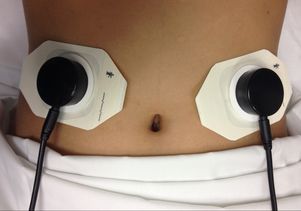
UCLA researchers have developed a disposable biosensor that attaches to the abdomen and may help doctors determine which patients should be fed following surgery.
Researchers at UCLA have set the stage for a watershed in mobile energy by using a unique graphene material to significantly boost the amount of energy supercapacitors can store.
Dozens of students from majors across campus have spent thousands of hours on building a loaf-of-bread-sized satellite that will measure space weather.