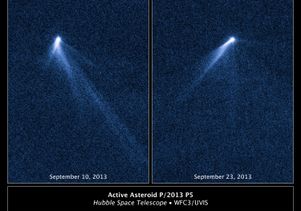
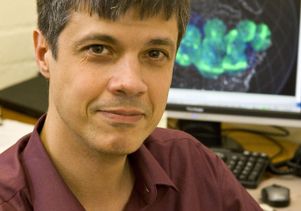
"It's hard to believe we're looking at an asteroid," said UCLA's David Jewitt. "Amazingly, its tail structures change dramatically in just 13 days as it belches out dust."
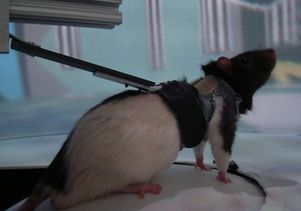
UCLA researchers created a multisensory virtual world for rats that allowed them to study for the first time how navigation and the expectation of a reward are connected.
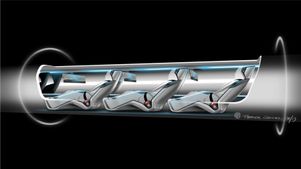
UCLA Architecture and Urban Design has announced it will work with Hyperloop Transportation Technologies Inc. for its 2014–15 master of architecture II program known as SUPRASTUDIO.
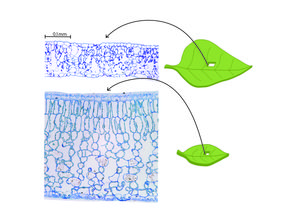
The team found that the thicker the leaf, the larger the size of the cells in nearly all of its tissues. But a leaf's surface area, whether tiny or huge, has no relation to cell size.
The research could help improve the design and environmental impact of reactors, which are used in the manufacture of pharmaceuticals and other chemical products.
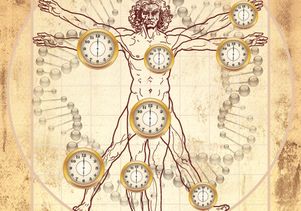
Using the clock, researchers can gauge the age of diverse human organs and tissues. Unexpectedly, they found some parts of the anatomy, like women's breast tissue, age faster than the rest of the body.
The search for the elusive "God particle" was aided by a number of faculty members and their teams, who helped design and build the cutting-edge equipment and conduct research.
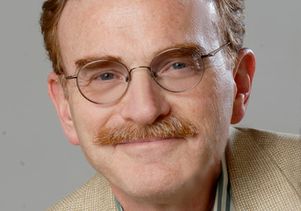
Randy Schekman is the seventh UCLA alumnus to win a Nobel Prize. Professors at UCLA remember him as a brilliant undergraduate with insights far beyond his years.
Schekman, a professor at UC Berkeley, and two others received the prize in physiology or medicine for their role in identifying how proteins are secreted and transported in human cells.
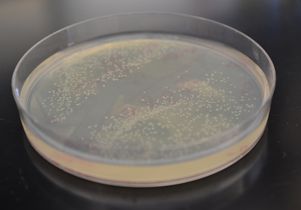
UCLA chemical engineering researchers have created a new synthetic metabolic pathway for breaking down glucose that could lead to a 50 percent increase in the production of biofuels.
The new pathway is intended to replace the natural...
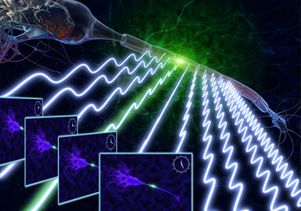
UCLA's new high-speed microscopy technique, which was inspired by wireless communications, is some 10 times faster than current fluorescence-imaging technologies.
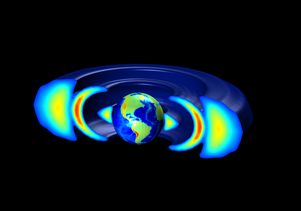
"We have finally found what powers Earth's aurora and radiation belts," said UCLA's Vassilis Angelopoulos. "It took many years ... but it has certainly paid off."
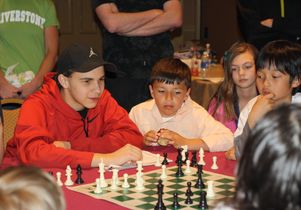
Joined by his older brother in the Class of 2017, Luke Vellotti plans to study math and computer science while he continues using his chess skills to help others.
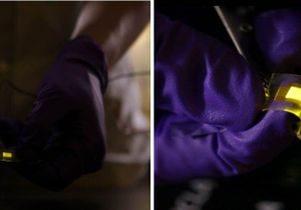
Imagine a curtain that illuminates a room or a smartphone screen that can be pulled to twice its normal size. UCLA's new OLED technology takes us a step closer to that reality.
In pondering the mysterious ring in the Earth's Van Allen belts, researchers made a crucial discovery: Not all high-energy particles obey the same physics.
With renewed funding from the NSF and EPA, UC CEIN continues to pioneer new strategies to more quickly and reliably gauge the potential toxicity of nanomaterials.
Easily accessible through an online app, UCLA-developed research maps help neuroscientists quickly scan what is already known in their field and plan their next study.
Patricia Greenfield's analysis of some 1.5 million books published between 1800 and 2000 shows how human psychology has evolved in response to historical change.
With the Thirty Meter Telescope project in Hawaii, UCLA and the University of California have moved a step closer to peering deeper into the cosmos than ever before.
Our happiness can impact our gene expression, but it's the way in which we're happy that determines whether that expression is positive or negative, UCLA researchers say.