A team led by UCLA Fielding School of Public Health researchers has received a $2.1 million grant from the National Institutes of Health to use artificial intelligence to improve risk assessment for those suffering from diabetes and related complications.
The research team, made up of scholars from UCLA, the Los Alamos National Laboratory and the Department of Veterans Affairs, was recognized by the National Institute of Diabetes and Digestive and Kidney Diseases, part of the NIH, as an example of bringing together scientists from health care providers, the U.S. national lab system and academia.
“This research is a testament to the power of interdisciplinary collaboration," said Dr. Michael Ong, professor-in-residence of medicine and health policy and management at UCLA Fielding and associate chief of staff for research and development at VA Greater Los Angeles Healthcare System. “Combining AI, data science and clinical expertise, we are building next-generation tools to transform complex disease management and personalized medicine.”
Diabetes is a chronic condition that reduces the body’s ability to process glucose (blood sugar). Adverse health effects include damage to the circulatory system, vision problems, nerve damage, stomach or intestinal problems, slow healing, kidney disease and the risk of heart disease, stroke and cancer.
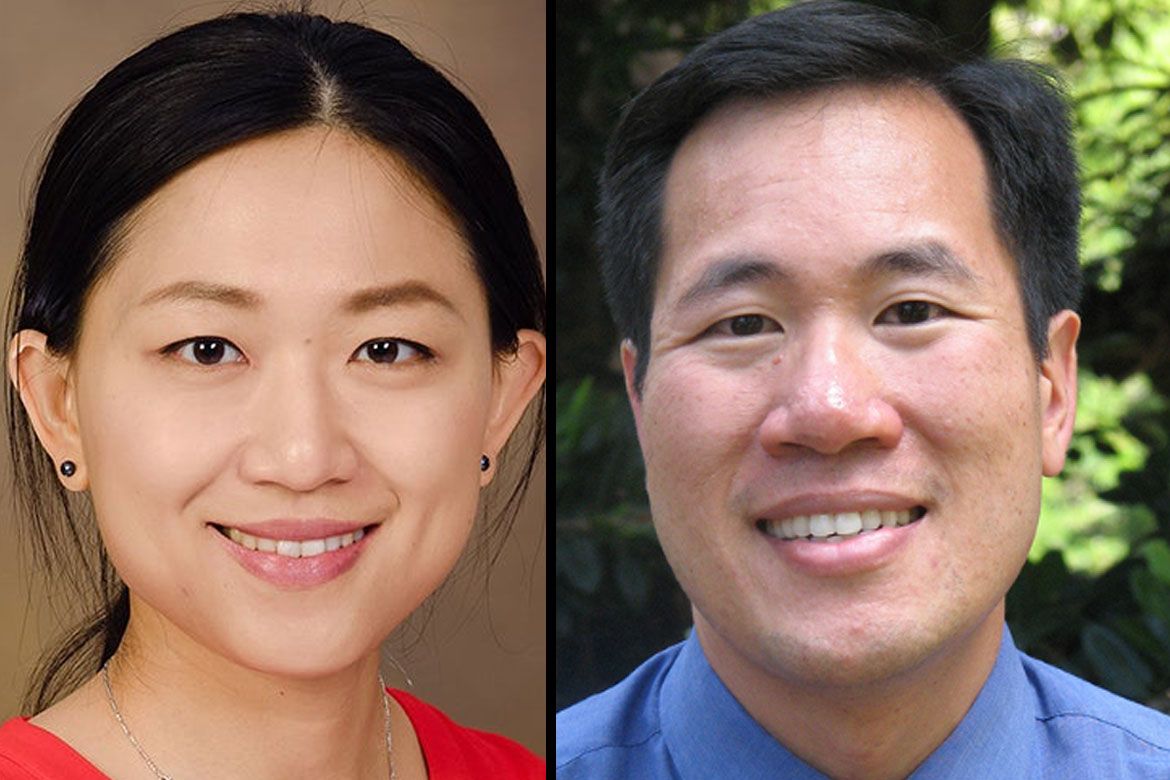
The four-year-long research project is led by Jin Zhou, associate professor-in-residence in UCLA Fielding’s department of biostatistics and a researcher at the Veteran Affairs Greater Los Angeles system. Jin Zhou, who works at the interface of statistics, genetics and biomedical data, earned her doctorate at UCLA. Jin Zhou is joined by principal investigators Gang Li and Hua Zhou, both professors in UCLA Fielding’s department of biostatistics.
“We’re focused on developing AI-powered prediction models to track disease progression in diverse populations, improve risk assessment for diabetes complications and address challenges in analyzing real-world data,” Jin Zhou said. “Our goal is to create real-world, scalable solutions that can be applied across healthcare systems.”
The project brings together a distinguished team of collaborators, including Xiaowu Dai (UCLA), Dr. Peter Reaven (VA) and Benjamin McMahon (LANL).



