All eyes are on Paris as the 2015 UN Climate Conference begins. California is well-represented, with many from the state participating, including five UCLA faculty and seven students.
From less electricity generated by coal to more whales in California, UCLA Institute of the Environment and Sustainability director Peter Kareiva offers things to be thankful for.
The study, by researchers at the California NanoSystems Institute, could be an important step in the effort to satisfy the world’s need for clean water.
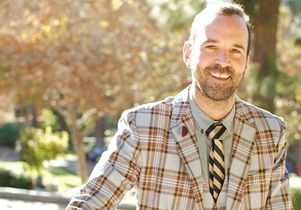
Eating local is good. All corporations are bad. Population growth is the problem. Peter Kareiva, director of the UCLA Institute of the Environment and Sustainability, implores people to question assertions like these.
Jon Christensen writes that to take these solutions from UC-wide to a global scale, we’ve got to start now using a combination of technology, outreach and policy.
UCLA environmental professors Magali Delmas and Susanna Hecht are among the climate experts, politicians and industry leaders gathering in San Diego today for a University of California climate change summit.
Fielding School of Public Health research touts the virtues of the open-streets program, which temporarily closes local roads to motor vehicles and encourages walking and cycling.
From Oct. 6 and running through Dec. 10, staff, faculty and students can join the challenge to reduce their carbon footprints and earn points for UCLA.
The particles are used in a wide range of consumer products for their ability to kill bacteria. But that benefit might be coming at a cost to the environment.
By combining never-before–released data from energy utilities with public data, UCLA researchers created a database that provides an unprecedented look at the energy-use landscape.
Cement manufacturing accounts for roughly 7 percent of the world’s carbon dioxide emissions, but scientists are determined to lessen its environmental impact.