UCLA Newsroom is launching a spotlight series designed to bring our community closer together by highlighting Bruins who make this campus special — from world-renowned faculty to the staff who keep UCLA running every day. By sharing their stories, we hope to deepen a sense of belonging and celebrate what it truly means to be part of One UCLA.
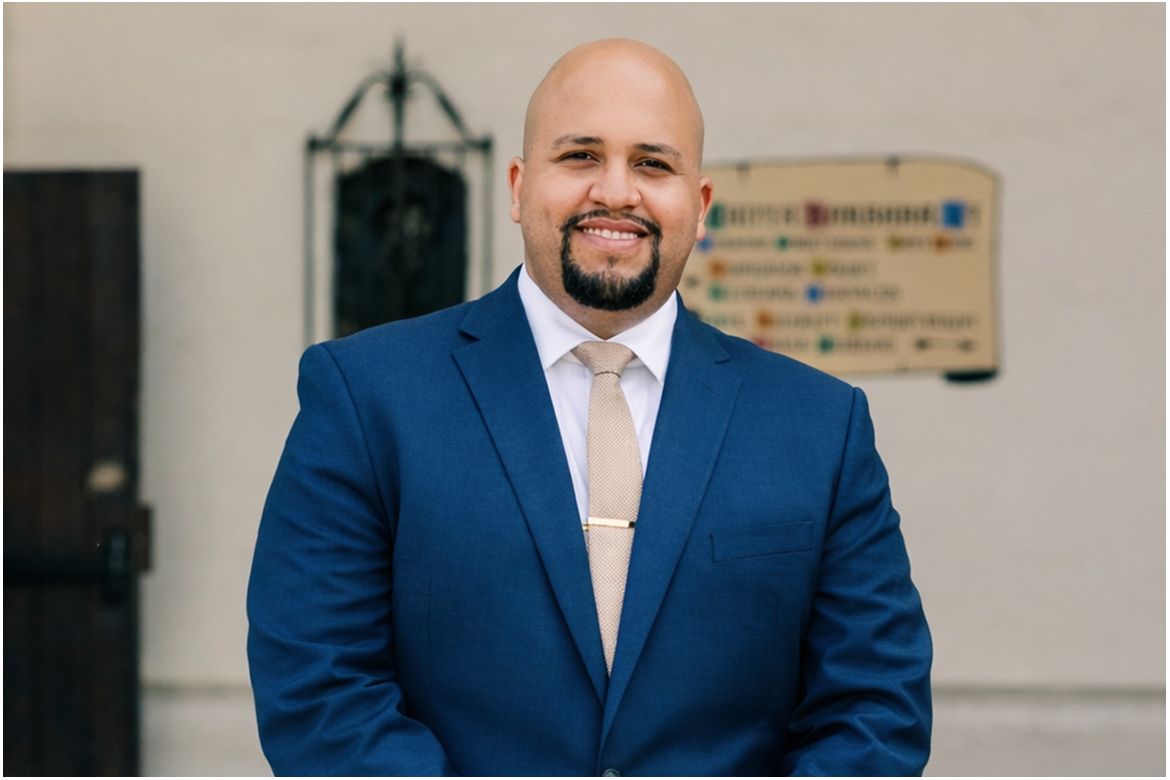
The series kicks off with Richard Mejia, UCLA’s newly minted director of emergency communications and information in the UCLA Office of Campus and Community Safety. Mejia spent time studying sports journalism and writing before pivoting into public affairs, where he discovered a passion for strategic communications, community engagement and crisis management. Most recently, he served as a public information officer for the Long Beach Police Department, leading all aspects of communications, including social media, media relations, news conferences and crises. While there, he also earned his master’s in sport management, which he says helped him become a better leader and communicator.
Newsroom sat down with Mejia to learn more about him and his new role. This interview has been edited for length and clarity.
What’s been inspiring you lately?
Believe it or not: filling a void. What I mean by that is I draw a lot of inspiration from looking back at the past — not dwelling or fixating on it — but knowing what happened before helps me move forward. What keeps me motivated here at UCLA are the communications gaps I’m helping to fill with the creation of the Office of Campus and Community Safety (OCCS).
I’m also inspired by all the folks I’ve been speaking with across campus for the past few months. People are interested in my work at OCCS, and they’re deeply invested in the university. Much of that work has been driven by these conversations — I’ve met with faculty, staff, communicators and anyone who’s willing to talk to me. I’ve heard about what they would like to see from someone in my role, things that have worked in the past and what they think OCCS should be in the future. I’m hearing about what folks want to see in BruinAlerts, updates and social media content from UCPD (UCLA Police Department).
What is unique about the Office of Campus and Community Safety?
It’s unique in that it’s brand new, but across our region and the Big Ten, it’s the first office of its kind that exists with an associate vice chancellor overseeing law enforcement, emergency management and now, our behavior intervention team. OCCS is responsible for every entity that manages the physical safety of our campus.
UCLA is, of course, one of the most recognizable universities in the world that sits in a very densely populated area with some of the world’s most brilliant minds. It really is one of the safest places to be, and now we have a former LAPD commander in Steve Lurie, who is also a Bruin. Steve’s experience is so multifaceted — he’s worked in traditional law enforcement, the office of constitutional policing (so he understands policy, history and fair policing), and he’s a former attorney. He has the capability and experience to reinforce the message of safety across campus.
What I bring to my role is also unique because law enforcement public information officers are typically lieutenants or sworn personnel who do not come from a traditional communications background. I’m leaning into my journalism background and expertise in camera, video, audio and crisis communications planning to do so many exciting things.
What is the best advice or insight you’ve received from a mentor that impacted your career?
Having mentors and talking to folks who have been somewhere you haven’t is important for both professional and personal progress. One of the best pieces of advice I’ve ever received was what inspired me to continue this career and join UCLA. As a graduate student last year, I was frustrated with my career direction. I was unsure whether I wanted to continue in public affairs or potentially go back into sports. It felt “too late” to pivot. A professor who became a mentor and confidant told me that I was not “too late” for anything; rather, I was right where I was supposed to be — I just didn’t know it yet.
I took that to heart and kept doing what I was doing, which helped me realize that too often, we get bogged down by our own minds. We may be working hard but still feeling as if everything is going wrong. But if you know where to put your energy and intention, things will have a way of working out.
Is there any advice you would give to someone who is just starting their career at UCLA?
When you land at a place like UCLA, you’ll feel an automatic desire to hit the ground running, impress everyone, do all the things and take on all the work — I totally get that. But UCLA is a huge place with so many people to meet! My biggest advice would be to slow down and meet as many people as you can, because everyone here is super nice, super smart and willing to chat with you.
Find out what the scope of your job is for the first few weeks. But early on, meet as many people as you can, get an idea of what the culture is in this massive place, learn who does what and who keeps this place running. The biggest key to success here is the ability to communicate with our giant ecosystem of faculty, staff, students and others.