If there was ever a definition of someone who is truly “UCLA for Life,” it’s Janet Reilly ’86. As chair of the 26-member University of California Board of Regents, Reilly plays a vital role in the operation and mission of the entire UC system, one of the most illustrious college networks in the world today. To this formidable task she brings her own unique Bruin experience, one that paved the way for her career as a journalist and health care advocate — and, perhaps most importantly, fomented in her a profound desire to give back.
The youngest of six children, Reilly was born and raised in Sacramento to parents who did not graduate from college. But they instilled in her, and her siblings, a deep and abiding belief that an education was the true path not only to career success, but also to personal growth and happiness.
Here, Reilly talks about the lure of Los Angeles, tackling the challenges facing higher ed today, and how being a parent influences her decision-making.
Let’s start with your UCLA journey.
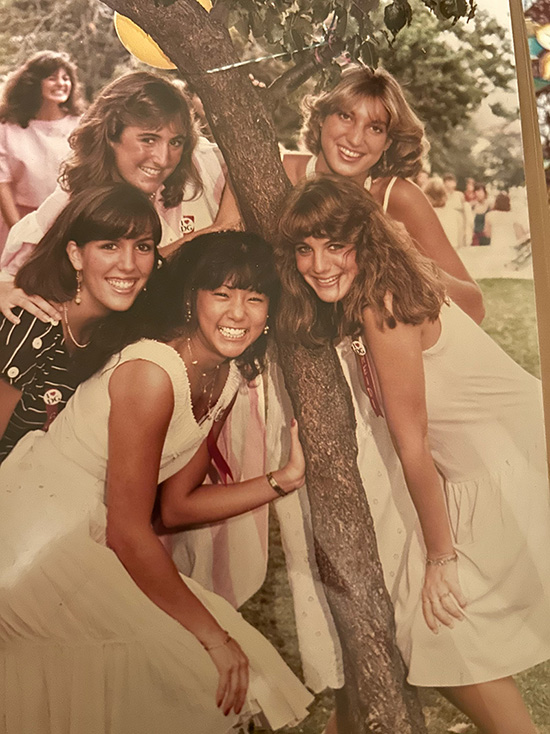
UCLA changed my life. It really did. It laid the foundation for everything that came after, from my career choices to my civic engagement to a lifelong love of learning. It really all happened at UCLA. UCLA opened my world.
Why UCLA?
I'm going to get in trouble living in San Francisco saying these things, but I had been to Los Angeles a few times, and I just fell in love with the place. So it was really L.A. that drew me here. My brother went to [UC] Berkeley, but I wanted to get a little further from home and I was really enamored with Los Angeles. I just felt like it was a place of discovery and new ideas and exciting people.
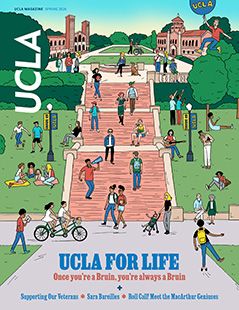
One initiative that the chancellor has shared as part of the university’s collective vision is UCLA for Life. When you hear that term, what does it mean for you?
It means you are a Bruin forever. I think students at UCLA — they’re curious, they're interested, they're lovers of learning. And we have to keep that spirit alive well beyond our years on campus. I think people in today's society are hungry for community. To feel like they belong. And I think the Bruin community is very important to most of us. And we can foster that.
I agree with you that people want community. I think it's tough with technology, social media, TikTok — everybody's attention is all over the place.
Right. Technology can be part of it. But that continuous learning, discovery, community — it’s very, very important.
How does being a lifelong Bruin inform your work as chair of the Board of Regents?
I think it's critical. Because I understand this student experience. I've had the student experience. I look at many of these students and I think, Wow, that was me, many, many years ago. And we as the Board of Regents need to preserve and steward this university forward through good times and bad, and make sure future generations have the same influential experience that we had. And it's not an easy task. It's tough. These are difficult times. Having that lived experience is really important.
You've had your first year as board chair. What has been the biggest challenge?
Governing in this sustained state of uncertainty. We've got our federal challenges. We have financial pressures. We have political scrutiny. We have society polarization. That has been difficult. Also, making short-term decisions that we need to make, but balancing that with long-term needs. So there's always a balancing act. In the end, we are a fiduciary board. It is our responsibility to make sure this university system is fiscally sound.
That means making some people unhappy, right? Because you can't give everybody everything.
I'm a mother. I know I can't give everybody everything. Really, our budget is a blueprint of our priorities. What is most important? We have to have priorities that are agreed upon by the regents, by the president of this university, by our chancellors, and prioritize, because you’re right — you can't have it all. We always have to think differently, with a lens on what's coming in the future. What can we invest in now that may not pay immediate dividends, but down the road will?
When you think of all the students you’ve met, what are the takeaways for you?
They’re brilliant. So much smarter than I was [laughs]. They’re resilient, hardworking, and able to multitask in a world where that can be difficult. And they have such a great sense of optimism. They feel a sense of responsibility to the world beyond themselves. I am so inspired by them.
Whenever I’m feeling down, I will ask my team, “Can I meet with the students? Can you bring a group of students that we can just talk to and have a meal or have a cup of coffee with?” And I’ve made it a priority to meet with students who I know are particularly challenged, who are single parents, who are part of the foster care system, who, you know, are working two or three jobs to be able to afford to attend this university. I always want to hear about them, their stories. And how we can help them.
Universities are under attack ideologically. It feels very fraught.
It does.
What do you say to reassure the students? I'm putting you on the spot.
Keep going. The sun always rises. Things always get better. That's something we know for certain. The hardships, the struggles, the failures always set you up for something much, much better. I actually speak to a lot of high school students, and I have a whole speech on failure. You learn so much more from failure and hardship than you ever will from success. It sounds clichéd, but it's absolutely true. I've accomplished a lot. But there have been a lot of failures along the way. And that's OK. People don't necessarily see it. But you carry it with you. It makes you who you are.
If you're talking to other alums and they say, “I want to support UCLA, I want to support the UC,” what's the best way to do it? I mean, obviously, donations are one thing.
Sure. But there are a thousand ways you can get involved, depending upon what your interests are. Are you interested in students? Are you more interested in medicine? Are you more interested in joining a development board? Are you interested in creating a specific alumni association group and getting people involved? We talked a little bit about how higher education in general is under assault. Be an ambassador. Not only for the UCs, but for higher education. For science, and the value of scientific research.
You're the co-founder and board president of Clinic by the Bay, a free and volunteer-powered health clinic. Talk to me about that.
I have no medical background at all, but I've always had a passion for, A, helping people, and B, access to health care. Our patients tend to be extremely sick when they come to us. We are often their last hope. They don’t have insurance. They cannot afford expensive medical bills. And our doctors and nurses at the clinic practice medicine the old-fashioned way, where our patients have hourlong appointments. And they aren’t charged for anything. We also don’t take any government money to operate. We operate on the generosity of our donors and volunteers. And our volunteers — many of them retired doctors — are able to practice medicine the way that they’ve done it years ago, or dreamed of doing it: holistic patient care without time constraints.
That sounds amazing.
It is. I always say, people get overwhelmed with the problems of the world, as I do as well. But changing your little corner of the world — like creating Clinic by the Bay — can make a huge difference.
Your life sounds exhausting. It also sounds incredibly fulfilling. What brings you joy?
Well, I try to practice self-care. It’s sort of a buzzword, but I think it's very important. I love the outdoors. I’m a big hiker. I’ve got a wonderful family. So spending time with my family; we do a lot of traveling. I have a great group of friends. I’ve been in the same book group for 30 years. There’s a lot of camaraderie there, which is really fun. So it’s just about finding joy in the little things every day. I think that's particularly important at this time in our world.
More UCLA for Life profiles:
Meyer Luskin ’49
Kareem Abdul-Jabbar ’69
Scott Galloway ’87
Read more from UCLA Magazine’s Spring 2026 issue.