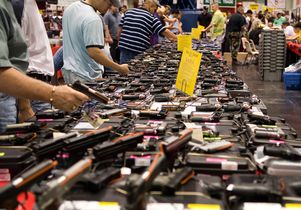
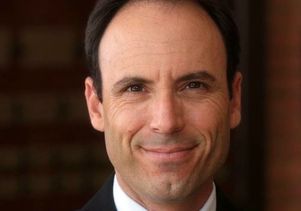
Law professor Adam Winkler writes that the “menacing” look of assault rifles belies their actual impact on society. Most gun crimes are committed with handguns.
These laws were intended to control the spread of the virus but an analysis of data show that they’ve had a punitive effect on people they were meant to protect.
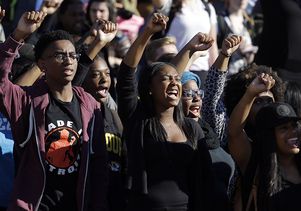
Law professor Cheryl Harris writes that as constitutional standards evolve, the assumption that a neutral rule permitting racist and anti-racist speech is fair could not be further from the truth.
The Ziffren Center for Media, Entertainment, Technology and Sports Law will expand UCLA Law’s highly regarded programs through curricular innovations, research support, new programming and hands-on skills training.
With an impressive string of cited amicus briefs and appellate litigation appearances, UCLA Law faculty members are making an impact on important issues.
Law professor Kimberlé Crenshaw writes in the Washington Post about how intersectionality brings to light the invisibility of many constituents within groups that claim them as members, but often fail to represent them.
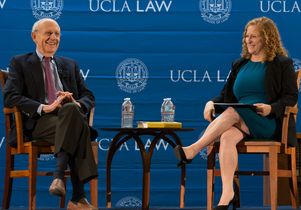
Breyer joined School of Law Dean Jennifer Mnookin in a discussion about the law, the Supreme Court and also his new book “The Court and The World: American Law and the New Global Realities.”
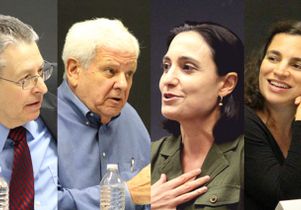
The much-debated nuclear agreement with Iran is now a fact and should be given a chance to work, a panel of experts from UCLA and the RAND Corporation said during a discussion that drew a packed crowd to a lecture hall in Bunche Hall recently.
The UCLA Asian American Studies Center has launched the Suyama Project to gather and make available online evidence of resistance among Japanese Americans forcibly removed from their homes during World War II.
Professor John Villasenor writes on Slate that the cyberattackers would bear primary responsibility but manufacturers and car owners could face some liability, too.
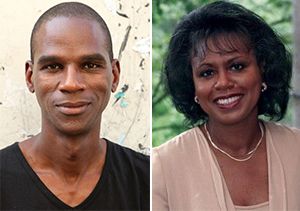
The UCLA Hammer Museum presents artist Mark Bradford and Brandeis University professor Anita Hill in a discussion of feminism as a gateway to activism and social justice, 2-4 p.m., Sunday, Aug. 2, at the Billy Wilder Theater.
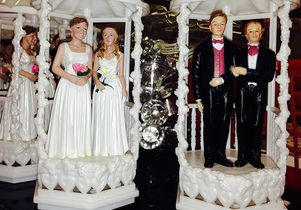
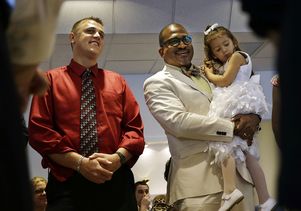
Law professor Douglas NeJaime writes in the Los Angeles Times that the struggle for full legal protections and equal rights has not ended for gay and lesbian families.
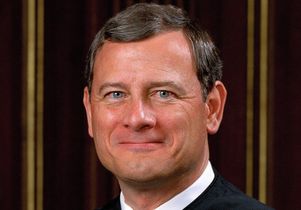
Adam Winkler notes that the legal reasoning used by Chief Justice John Roberts in the decision that upheld the president’s signature health care law will preserve it against future challenges.
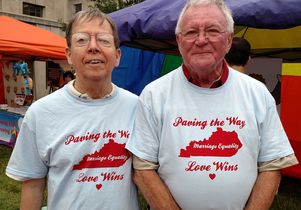
In its historic decision legalizing same-sex marriage nationwide, the U.S. Supreme Court today cited research by Gary Gates, the Blachford-Cooper Distinguished Scholar and Research Director at the Williams Institute at UCLA School of Law.
Law professor Adam Winkler writes that there are two cases — one famous and one forgotten — that may haunt the chief justice and explain his recent pivot away from the court’s conservative bloc.
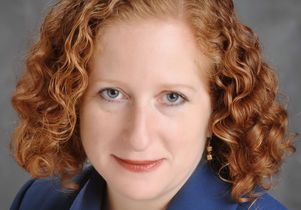
Jennifer Mnookin has served as vice dean for faculty and research and as vice dean for external appointments and intellectual life, and she is founding faculty director of the school’s Program on Understanding, Science and Evidence.