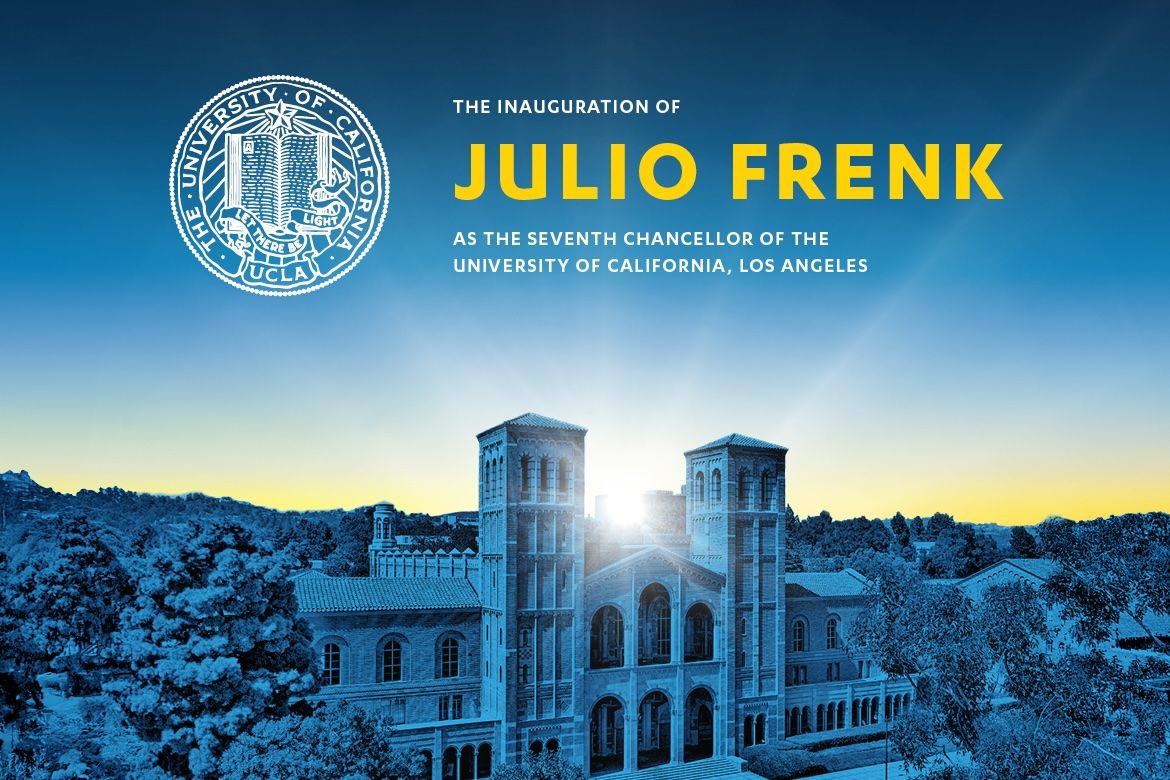
It hasn’t happened often in UCLA’s history — and just twice in the past 56 years — but on Thursday, June 5, the university will inaugurate a new chancellor in Dr. Julio Frenk. That momentous occasion will be preceded on June 4 by a symposium featuring inspiring presentations by eminent members of the university’s faculty.
Whether you’re attending these inauguration events in person, following the livestream at a watch party or just hanging around campus to soak up the celebratory atmosphere, there will be much to see and experience. Don’t miss the opportunity to be a part of the historic moment and to enjoy all the campus has to offer.
Browse the information below or explore by category:
Inauguration | Bruin Talks | Campus sights | Museums and gardens | Westwood | Events
Thursday, June 5, 10 a.m. to noon
Julio Frenk: Inauguration ceremony
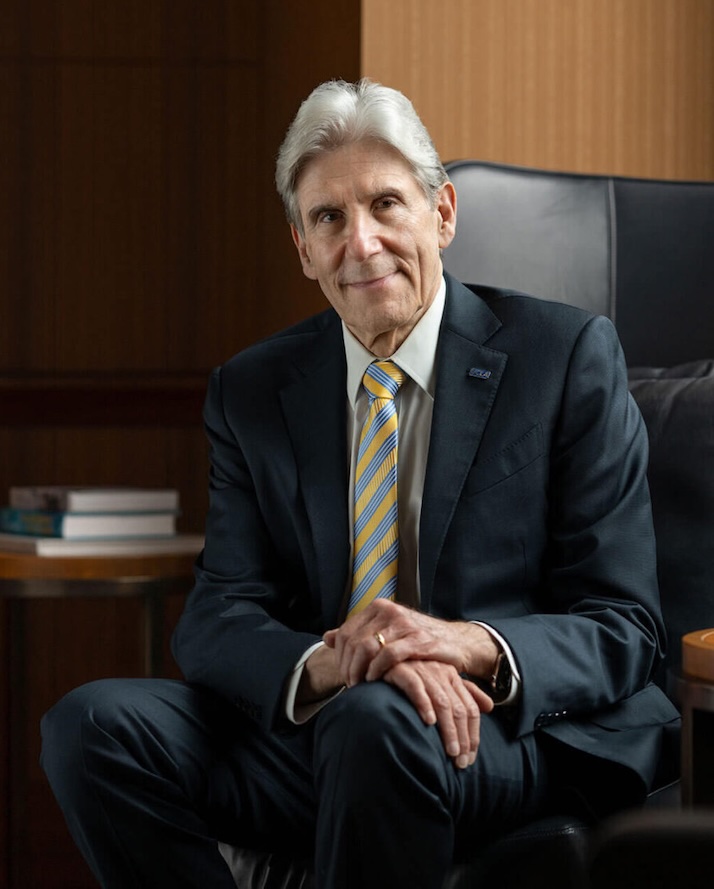
Signaling the start of a new era, Julio Frenk, who began his tenure as UCLA’s seventh chancellor in January, will be joined by Bruins past and present and distinguished delegates from around the world in Royce Hall as he is officially inaugurated and shares a collective vision — shaped by insights from the UCLA Connects: Listening Exercise with faculty, staff, students and community members — that will guide the university’s future. The event will also feature musical performances by students and faculty and a full-regalia academic procession.
“This inauguration is a celebration of our university’s past, present and future,” Frenk said. “It’s a moment to honor and recognize the many ways in which UCLA serves the common good.”
► Learn more | Watch the 10 a.m. livestream
Wednesday, June 4, 3:30 to 5 p.m.
Bruin Talks: A showcase of bold academic thought
The day before his formal inauguration, Chancellor Frenk kicks off UCLA Connects: Bruin Talks, which brings together six of UCLA’s leading scholars and artists from across disciplines for a series of presentations and conversations that showcase the incredible depth, breadth and impact Bruin scholarship and innovation.

Speakers will include world-renowned astrophysicist and Nobel Prize winner Andrea Ghez, groundbreaking transplant surgeon Abbas Ardehali, pioneering civil rights scholar and critical race theorist Kimberlé Crenshaw, famed mathematician and Fields Medal recipient Terence Tao, internationally celebrated opera and drama director Peter Sellars and widely watched expert on politics, media and elections Lynn Vavreck.
► Learn more | Watch the 3:30 p.m. livestream
UCLA’s scenic Westwood campus is always a hive of energy and activity, and the days around inauguration offer the perfect opportunity to explore. Whether your interests are academic or athletic, artistic or historic, inauguration week has something you’ll want to see, experience or remember. Here, a curated menu of some stellar sites and programming to celebrate the chancellor’s milestone — and to remind you why UCLA consistently tops university rankings in so many areas.
Explore: Roam the UCLA campus
There are so many amazing places to visit on campus, perhaps chief among them the stunning buildings that each tell a story of their own. And to make it easier to get around, check out our interactive campus map.
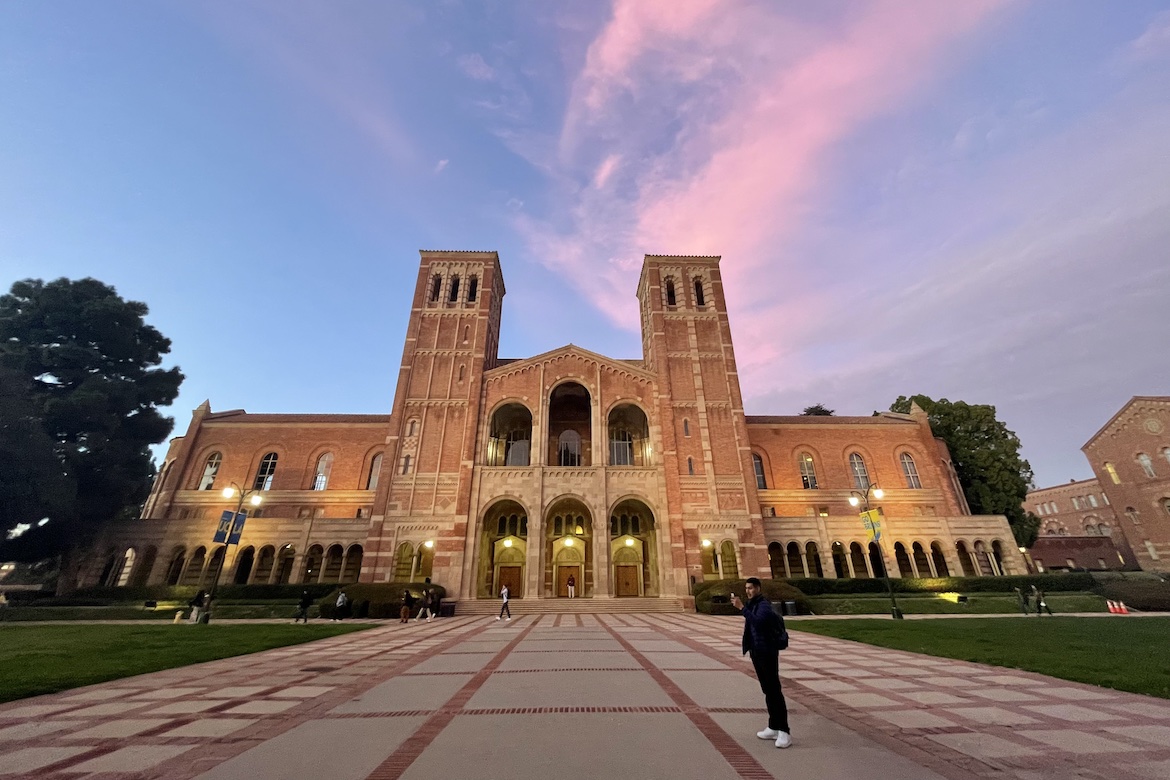
Take in Royce Hall
Named after California-born philosopher Josiah Royce, Royce Hall is perhaps UCLA’s most famous — and certainly most Instagrammed — structural landmark. Modeled after Milan’s Basilica of Sant’Ambrogio, the 1929 edifice has served as an Italian Romanesque–style backdrop for dozens of films and television shows, as well as a North Star for every student who has come to Westwood. Its live-event roots run deep, having hosted performances by such legends as Ella Fitzgerald, Frank Sinatra and Mikhail Baryshnikov. Royce will also serve as Chancellor Frenk’s inauguration ceremony site.
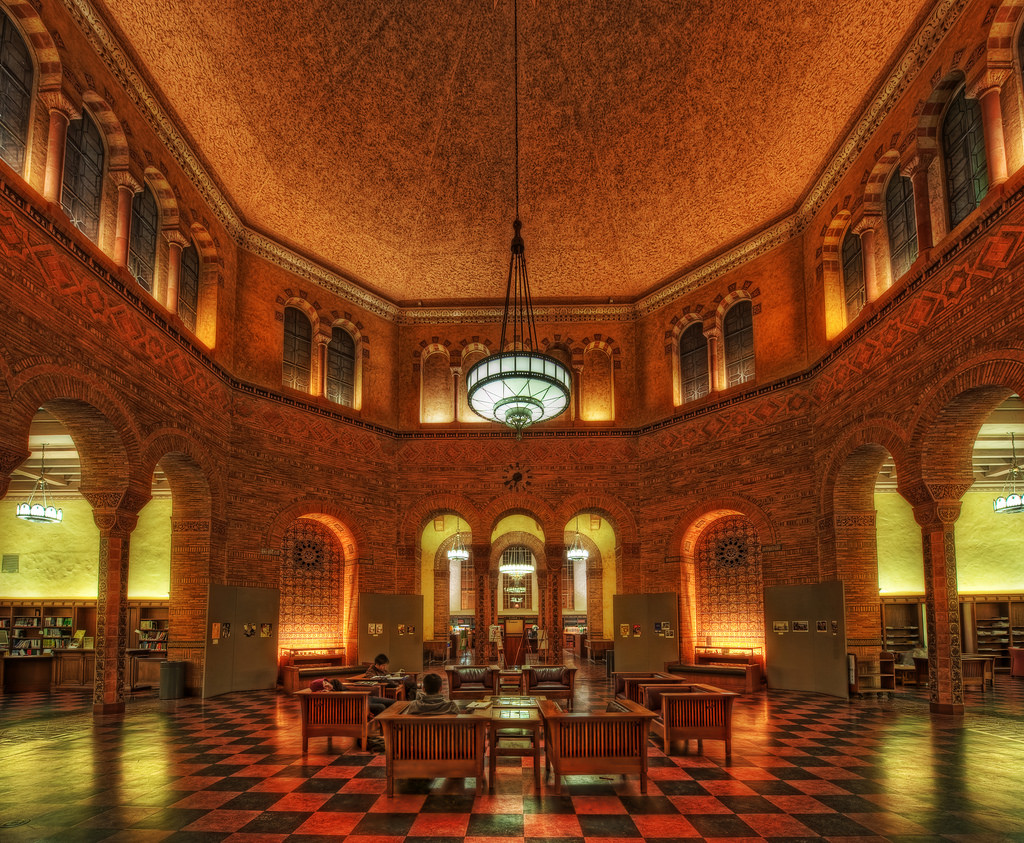
Check out Powell Library
Directly across the quad from Royce, Powell is one of UCLA’s four original structures and serves as the main undergraduate library. Influenced by Italian Romanesque architecture, with Moorish elements added to pay homage to California’s Spanish culture, the 1929 building features a 63-foot-high central octagonal dome. Wood ceilings, ornate carvings and exquisite mosaic tile also grace the interior. Fun fact: Ray Bradbury wrote an early draft of his classic 1953 dystopian novel “Fahrenheit 451” in the library basement in the late 1940s and early 1950s, using typewriters that were available for rent.
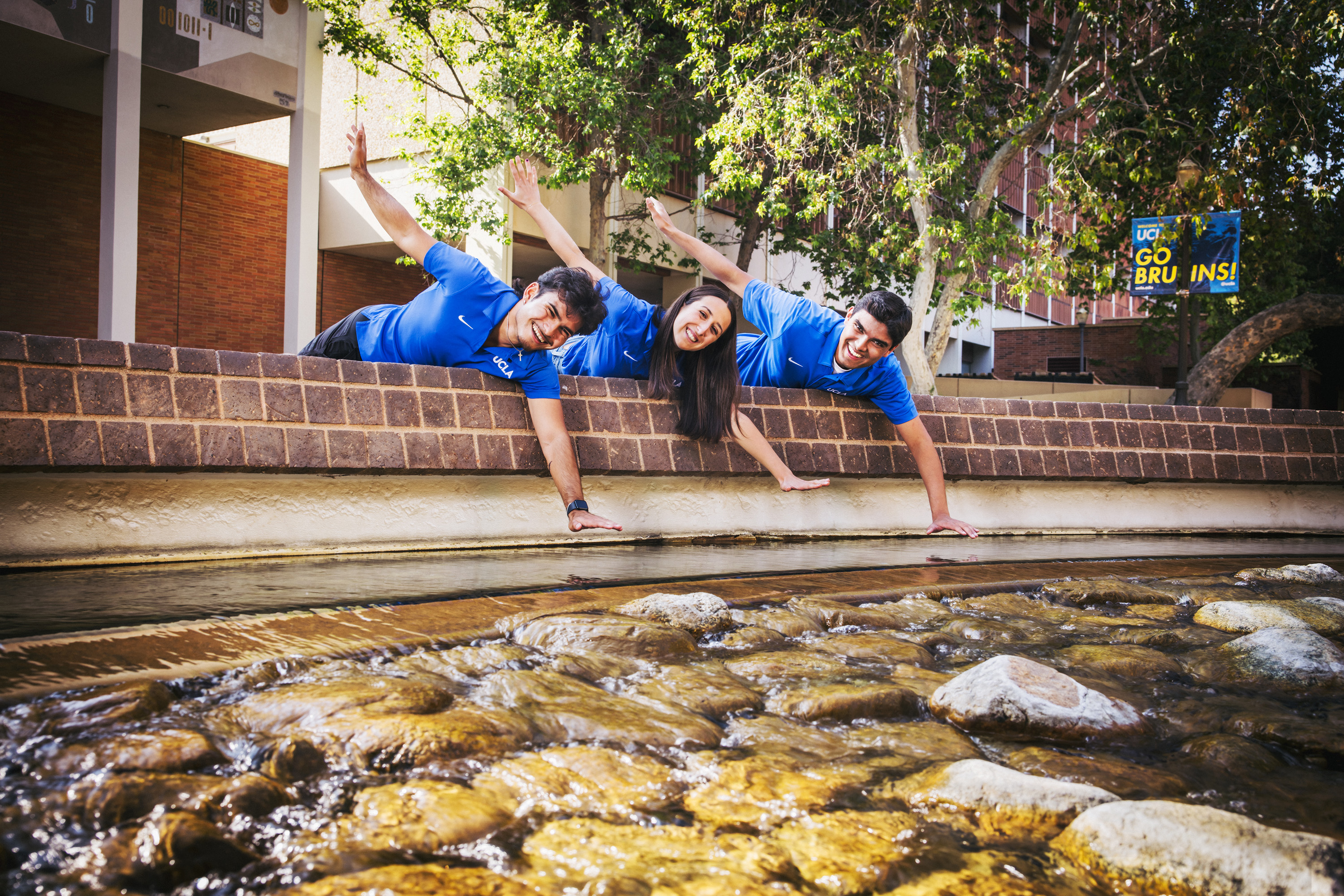
Wind your way on a campus tour
Explore UCLA's iconic grounds while learning more about the university, its history and lore by taking a guided campus tour. Led by energetic UCLA students, tours do include hills and stairs and can take up to two hours — so be sure to wear comfortable shoes. You can also learn more about some of the little-known historical treasures hiding in plain sight on campus in this video tour by professor emeritus Robert Gurval, who taught a course about UCLA's early history and architecture and has led his own walking tours since 2018.
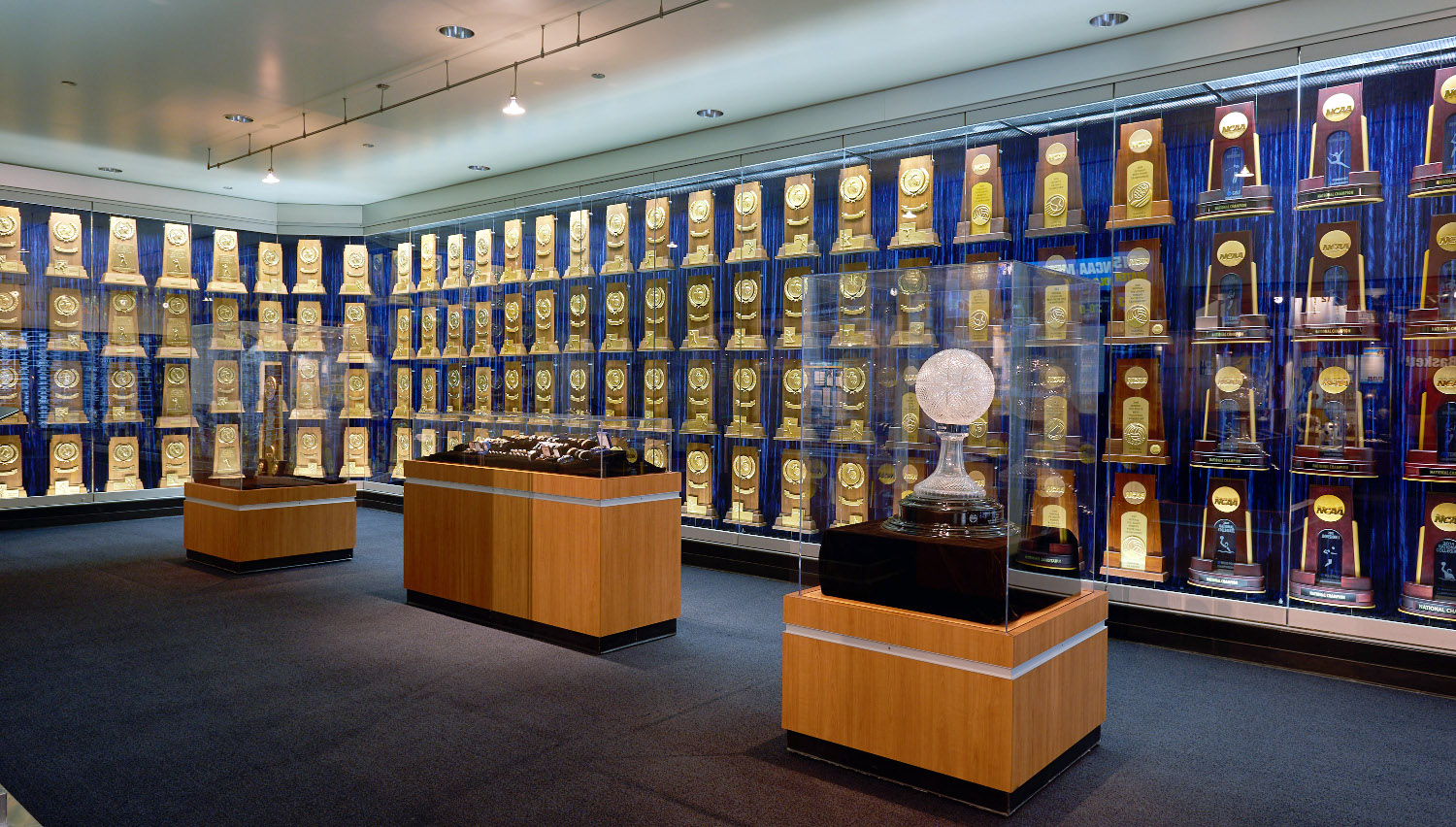
Get a dose of Bruin pride at the UCLA Athletic Hall of Fame
Located in the Morgan Center, the Hall of Fame boasts team trophies, memorabilia and a replica of the den at the home of legendary UCLA basketball coach John Wooden. It’s a great place to celebrate the achievements of Bruin sports icons like Kareem Abdul-Jabbar, Arthur Ashe, Rafer Johnson, Jackie Robinson, Bill Walton, Kenny Washington and Ann Meyers Drysdale And take a peek at nearby Pauley Pavilion, the site of so many athletic glories, as well as the 8-foot bronze statue of John Wooden on the arena’s north plaza.
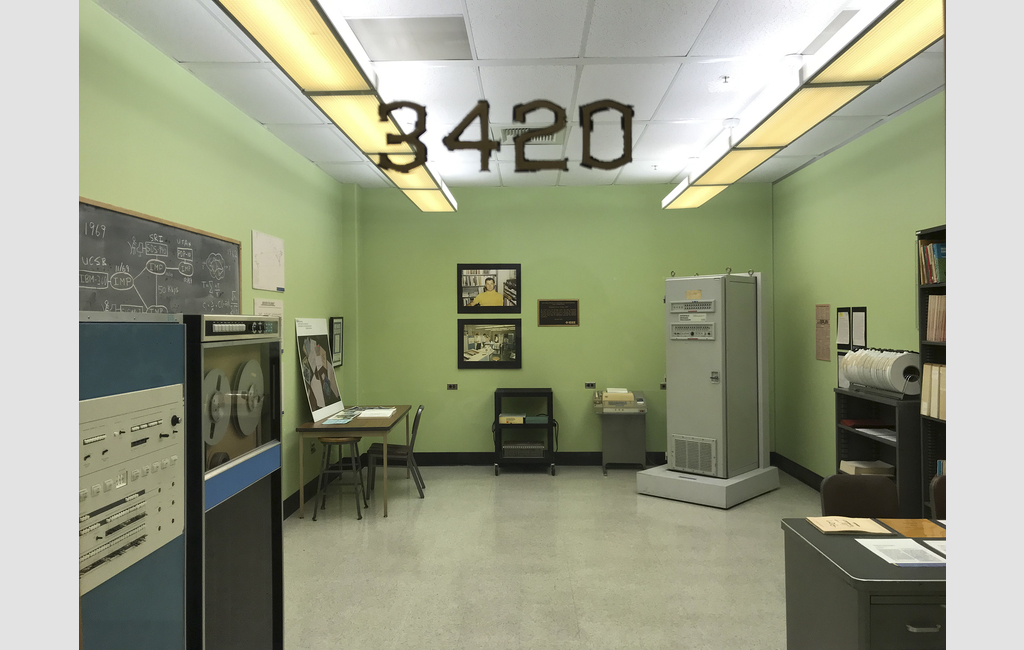
Connect to the birthplace of the internet
3420 Boelter Hall at UCLA was where, on the evening of Oct. 29, 1969, the internet was born. That’s when UCLA computer science professor Leonard Kleinrock and one of his students sent the world’s first computer-to-computer message to the Stanford Research Institute. And the rest is history. After many years, the small room was reborn as the Leonard Kleinrock Internet Heritage Site and Archive — restored to its 1969 glory with original equipment, including a router the size of a large refrigerator, and Kleinrock’s scientific notebooks and message logs. The mini-museum even did a star turn in Werner Herzog’s 2016 documentary “Lo and Behold: Reveries of a Connected World.” Today, the site is open for only limited hours, but it’s still worth a gander through the glass window on the door. Or you can really get in the spirit and take this virtual tour.
Shop the UCLA Store
Visit: Incredible art, cultural treasures and the beauty of nature
Classic paintings, cultural objects, modern art and student exhibitions are on continuous display across the campus. With its museums, galleries, theaters and performing arts venues, UCLA is a critical part of the Southern California, national and global art scenes, welcoming half a million visitors a year. Or maybe nature is more your thing? The campus also boasts a lush botanical garden and even a meteorite gallery that’s out of this world.
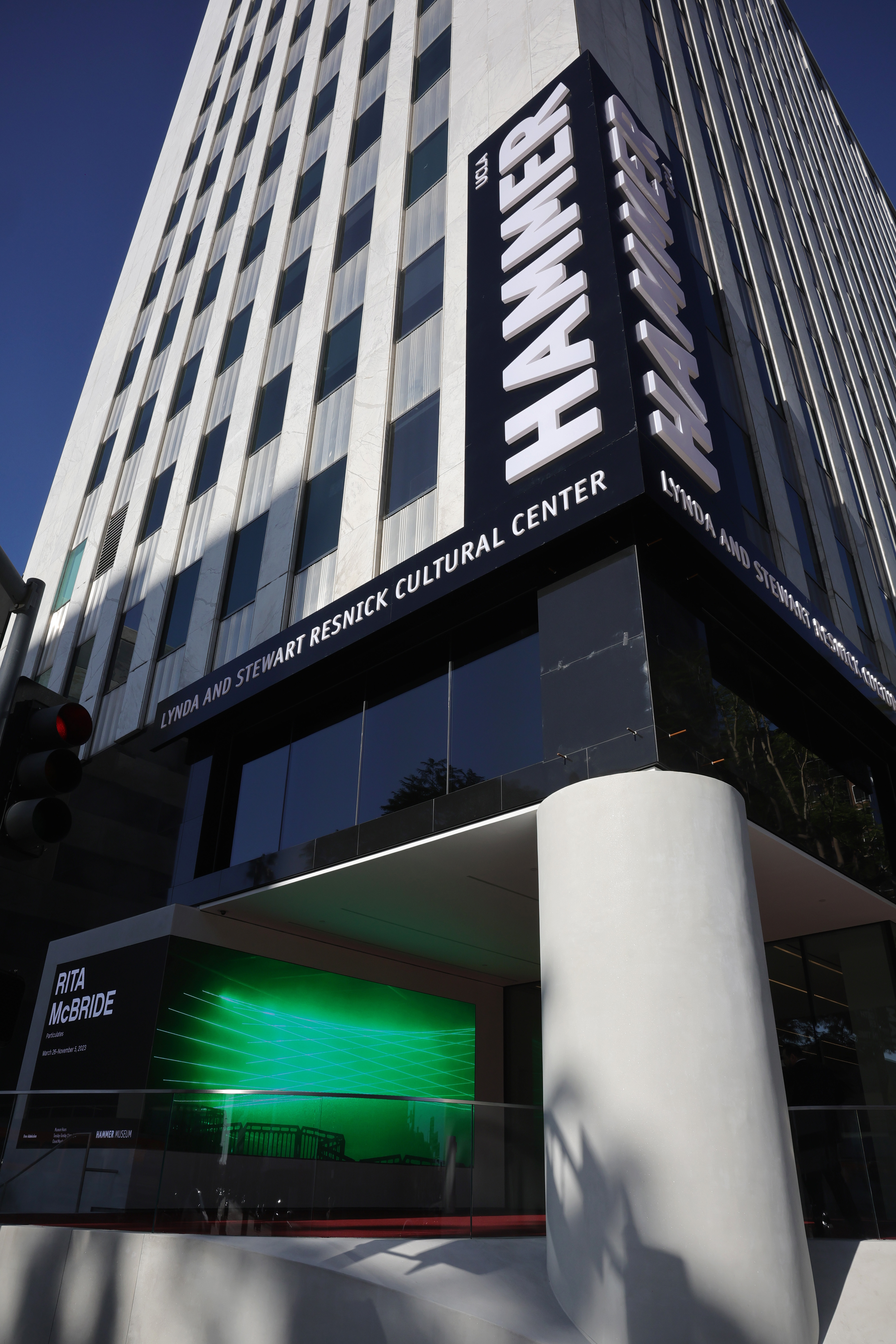
UCLA Hammer Museum
Named for American business tycoon Armand Hammer, whose stunning collection of 16th-through-20th–century art it houses, the Hammer is open every day but Monday and is always free to all. In 2023, it unveiled a two-decades-in-the-making transformation of its physical spaces, further establishing it as a vital hub for seeing and learning about art in Los Angeles. Stretching the length of Wilshire Boulevard between Westwood Boulevard and Glendon Avenue, and anchored by the Lynda and Stewart Resnick Cultural Center, the gallery’s current exhibitions include “Performance on Paper,” featuring drawings created at the intersection of music and dance, and “Head for the Hills,” which highlights a variety of art that, in the museum’s words, “use the local, personal and banal to tap into the universal.” A retrospective of the late American artist Noah Davis begins June 8.
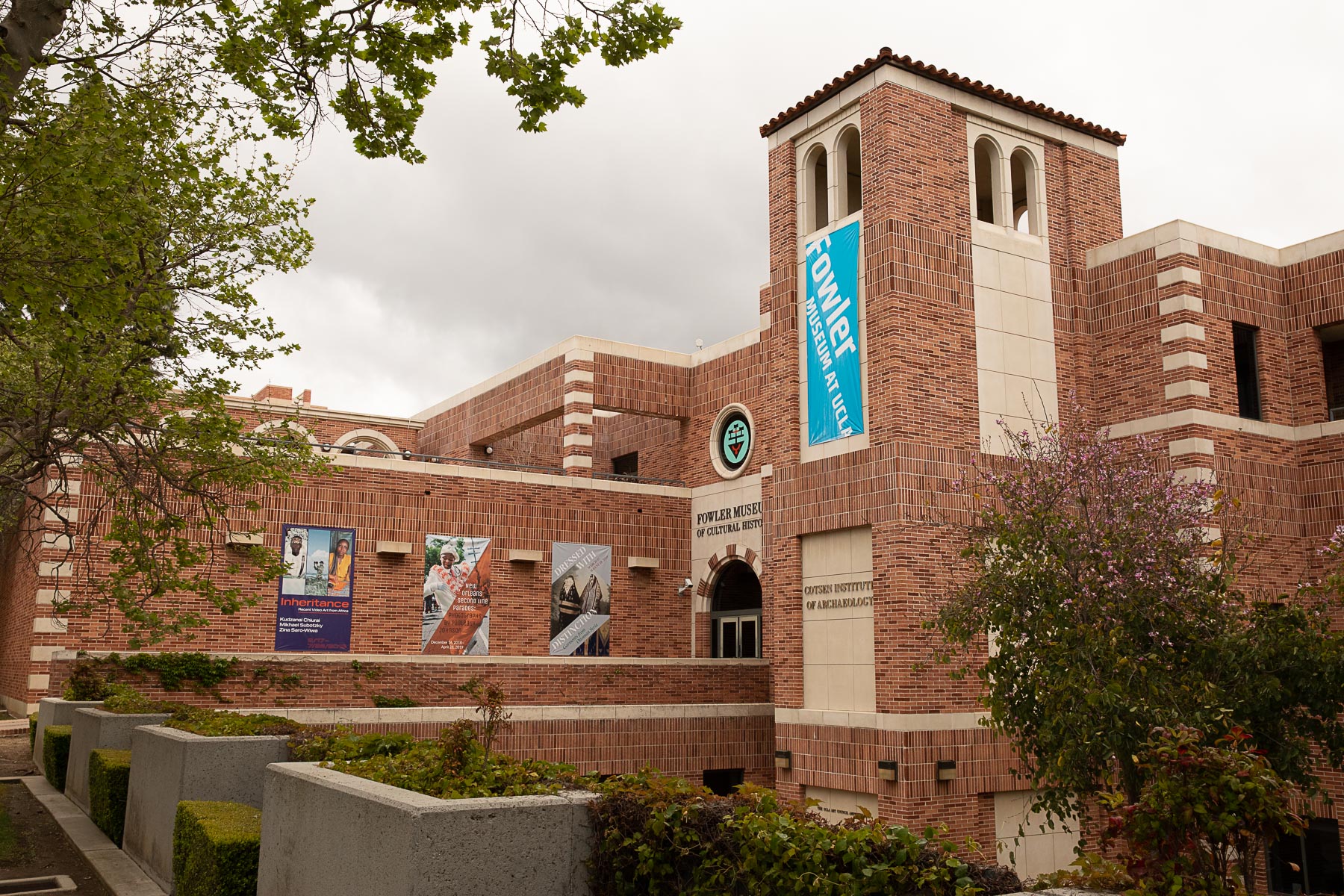
Fowler Museum at UCLA
Dedicated to global arts and cultures, with an emphasis on Africa, Asia, the Pacific and the Indigenous Americas, the Fowler is situated just steps away from Royce Hall and is home to over 130,000 artworks and cultural objects and more than 1,000 archaeological collections. The museum’s incredible holdings enable it to create groundbreaking curated exhibits in harmony with represented communities. Free to all, the Fowler is open Wednesday through Sunday and has several exhibitions currently on view.
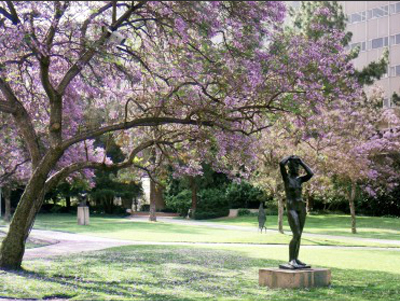
Franklin D. Murphy Sculpture Garden
Truly one of the hidden jewels of campus, the tranquil, idyllic 5-acre sculpture garden, tucked away in UCLA’s north campus, wows with more than 70 works by 19th- and 20th-century artists like Auguste Rodin, Alexander Calder, Hans Arp, Deborah Butterfield, Barbara Hepworth, Joan Miró and Jacques Lipchitz. The garden was dedicated in 1967 by UCLA’s then-chancellor, Franklin D. Murphy, who drew inspiration from the outdoor public artwork he observed as a young man touring Europe. It was intentionally designed to have no main entrance, which was deemed such an important element of the experience that during the expansion of Bunche Hall, part of the building was elevated so that it wouldn’t obstruct the walkway between the garden and the central campus.
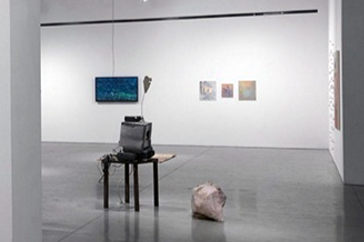
New Wight Gallery
Nestled within UCLA’s Broad Art Center, the gallery is a student-focused art space, hosting exhibitions for M.F.A. students throughout the academic year, as well as a biennial showcase of graduate-level artwork. The gallery takes its name from Frederick S. Wight, a painter and former associate director of the Institute of Contemporary Art in Boston, who joined UCLA’s art faculty and became curator of art materials in 1953. He helped put UCLA on the art map, bringing in exhibitions from modern masters during his accomplished two-decade tenure.
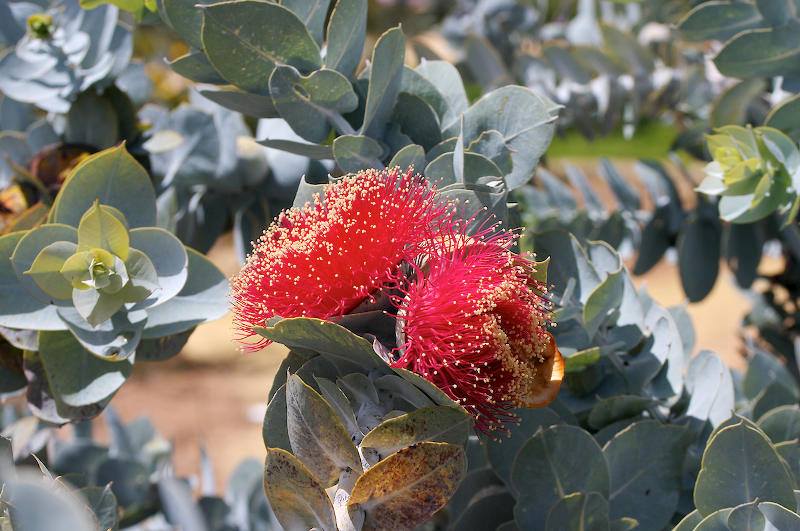
Mildred E. Matthias Botanical Garden
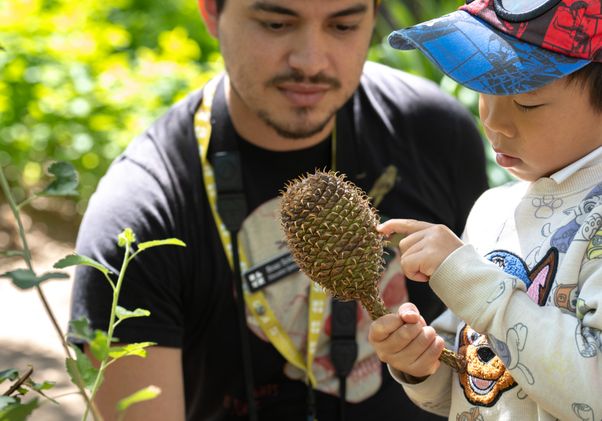
The sweeping grounds of UCLA aren’t merely pretty (though they are pretty); the Green Grounds-certified Westwood campus offers fine examples of environmental stewardship, native touches and sustainable spaces that nurture biodiversity. One of its gems is the Mildred E. Mathias Botanical Gardens, a 7.5-acre public museum and gathering place where visitors can spot more than 500 species of plants, birds, insects and other animals. UCLA has increasingly converted its turf areas to California native, drought-tolerant plants — an effort in large part informed by collaboration with members of the Gabrielino/Tongva tribe, the traditional caretakers of the land where the campus today sits. UCLA’s pockets of paradise can be found throughout campus, including sites that offer real-world lessons in teaching and research.
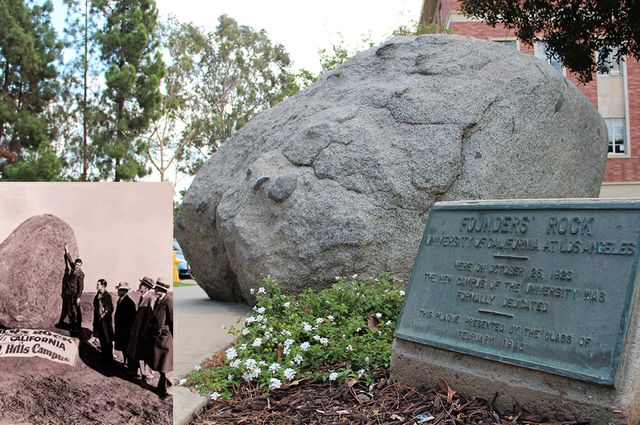
Founders’ Rock
UCLA’s literal foundation began with just one rock. Over a 10-day period in February 1926, Founders’ Rock, a 75-ton granite boulder, was trucked from a quarry in Perris Valley and placed on a wild hillside west of Beverly Hills. It was all the idea of University of California Regent Edward Dickson, who joined with his former UC Berkeley teacher Ernest Carroll Moore to establish a new site for the second University of California campus. The October 1926 ceremony formally celebrating the rock’s placement marked the symbolic start of construction on the new campus; a plaque — a gift from the class of 1946 — explains its origins. After several relocations, Founders’ Rock now sits at the northwest corner of Murphy Hall. Learn more about UCLA’s early history — including the rock and the architectural history of the campus — through this video.
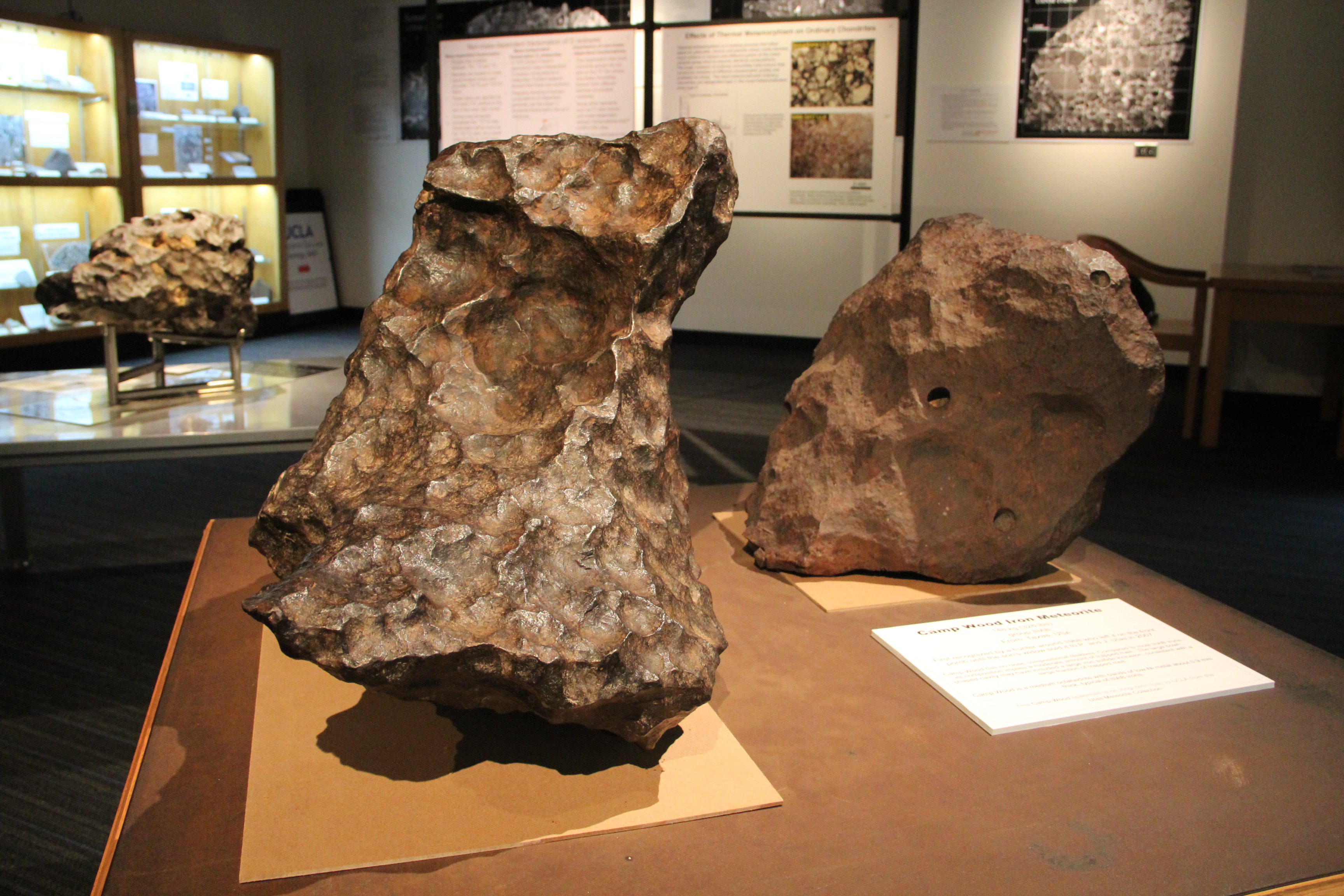
Meteorite Museum and Planetarium
UCLA’s museums, libraries and archives include more than 21 million objects from around the world — and more than a few from out of this world. The Meteorite Museum houses one of the largest collections of its kind, containing over 2,500 samples from about 1,500 different meteorites. Among its notable holdings: an extremely rare stony-iron pallasite meteorite, part of a 1,664-pound mass found in Argentina in the last century, that is estimated to be 4.5 billion years old. Also on display is a notable collection of “meteorwrongs” — objects people have suspected are meteorites but, well, just aren’t. And get a view of the heavens at the UCLA Planetarium, the white-domed structure on the eighth floor of the Mathematical Sciences Building operated by the UCLA Department of Physics and Astronomy. The star shows, which happen at 8 p.m. on Wednesdays during the academic year, are free and open to the public.
Stroll: Discover Westwood
It’s the home of UCLA, sure, but the village of Westwood is also the location of a surprising number of sites listed on the National Register of Historic Places, as well the Pierce Brothers Westwood Village Memorial Park — the final resting place of Marilyn Monroe, Kirk Douglas, Peter Falk and other Hollywood lumninaries. Come take a stroll.
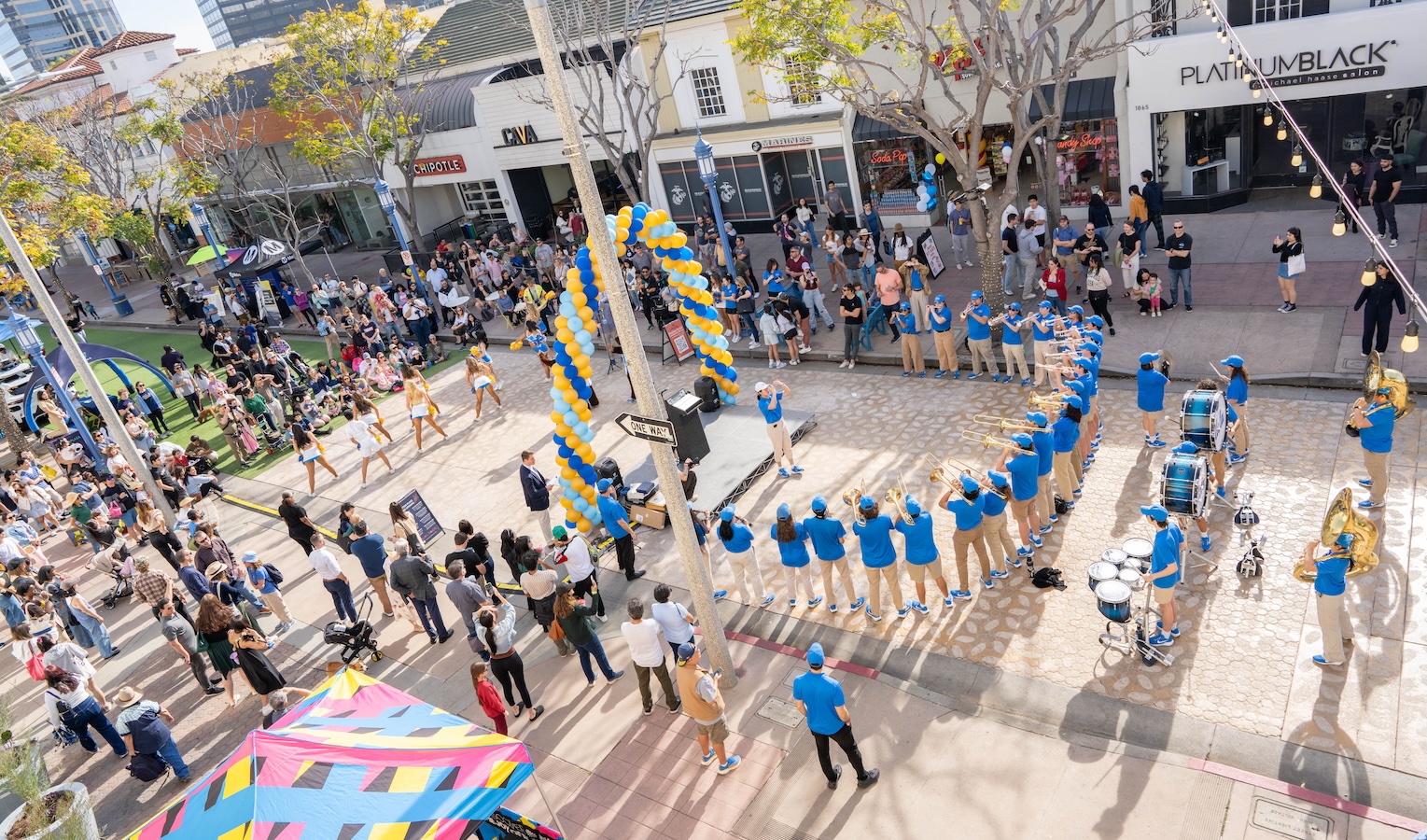
Broxton Plaza and Westwood Village
Historic Westwood Village is now home to the largest pedestrian plaza in the city of Los Angeles. Broxton Plaza, the 14,000-square-foot, car-free commercial stretch in the heart of the neighborhood, opened in February. The space on Broxton Avenue (between Kinross and Weyburn), hosts outdoor movies, a weekly farmers market and other regular community activities. Westwood Village's historic sites also include Chateau Colline, the corner tower of the former Ralphs supermarket and the Kelton and Strathmore apartments east of Veteran Avenue. Learn more about the evolution of Westwood.
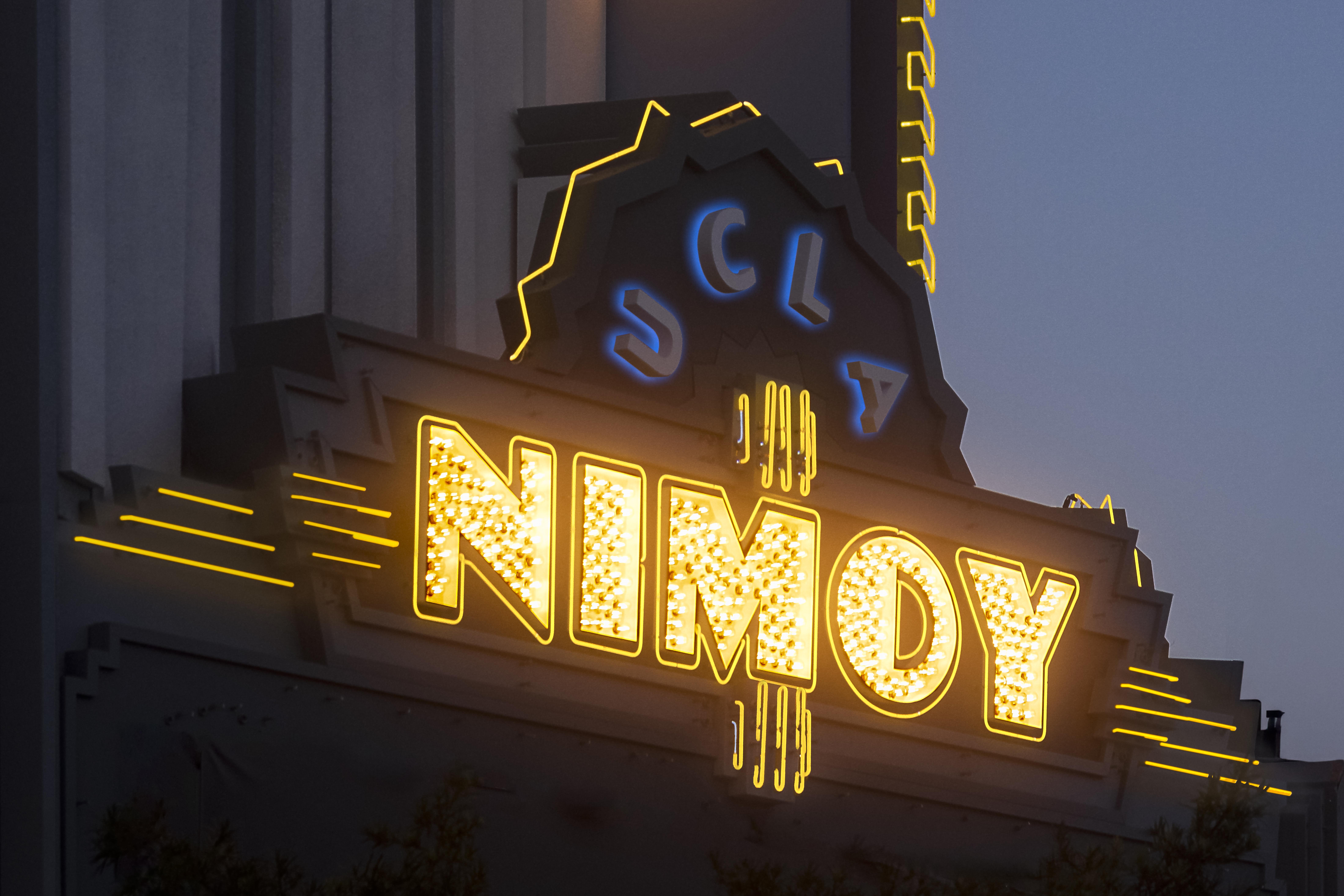
UCLA Nimoy Theater
Just south of campus, on Westwood Boulevard, the recently renovated UCLA Nimoy Theater — where programming is curated by UCLA’s Center for the Art of Performance — has preserved its historic auditorium murals and art deco aesthetics while bringing new energy as an all-electric, gold-level certified arts venue. UCLA’s 2018 purchase of what was then the dormant Crest Theater, was made possible in part by a major gift from actor, writer and director Susan Bay Nimoy who, with her late husband, actor Leonard Nimoy, were longtime and ardent supporters of the arts at UCLA. A quote from Leonard Nimoy’s iconic “Star Trek” character, Mr. Spock — “Live long and prosper” — adorns the theater’s entry, symbolizing its mission to foster both creativity and peace.
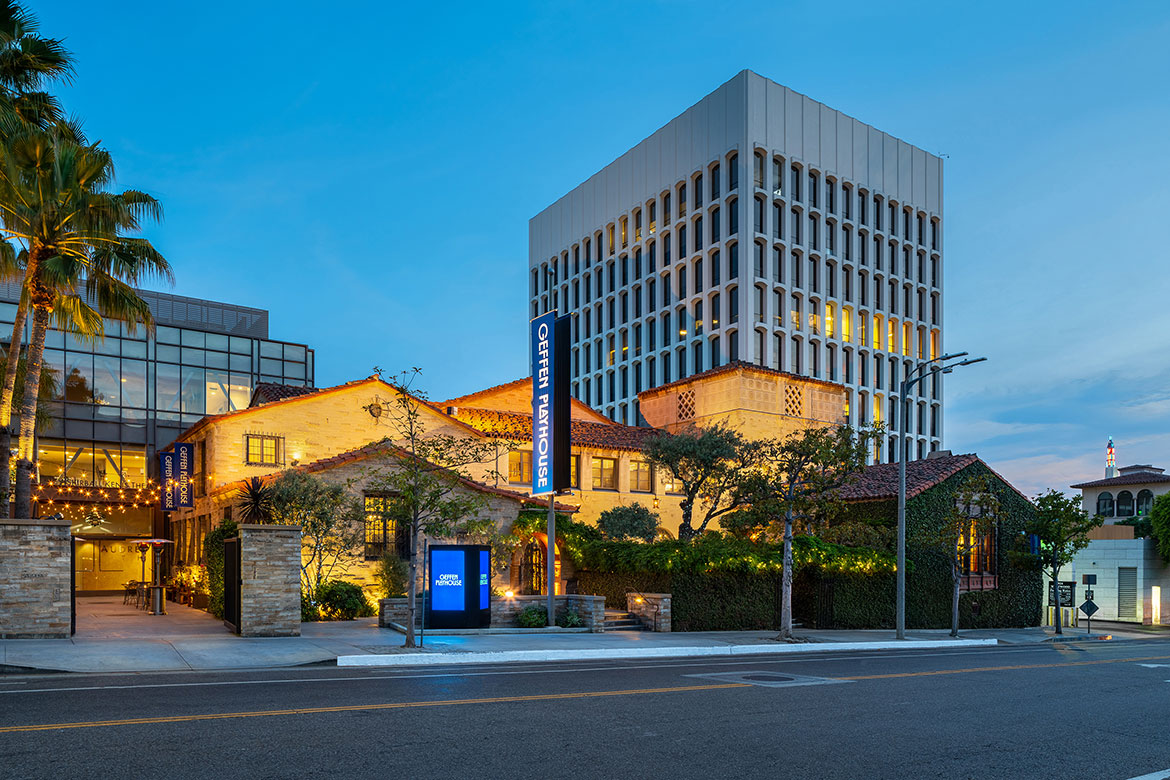
Geffen Playhouse
Across the street from UCLA sits the Geffen Playhouse, the renowned theater UCLA has been a partner with since its 1995 inception. UCLA owns and leases the building, which is named in honor of entertainment industry magnate, philanthropist and UCLA donor David Geffen. Beginning June 18, the theater will host the world premiere of “The Reservoir,” a heartwarming play about a young man, his meddling grandparents and the ways we find hope, healing and a path forward.
Watch: What’s on during the week of inauguration, June 4–8
Wednesday, June 4
Lunchtime art talk on Jason Moran
12:30 p.m.
Hammer Museum
The Hammer’s curatorial department offers free, insightful, brief discussions about artists every Wednesday at 12:30 p.m. This iteration, on jazz pianist, composer and performance artist Jason Moran, is led by Grunwald Center director and chief curator Naoko Takahatake.
Wednesday, June 4
Roxane Gay, The Portable Feminist Reader
7:30 p.m.
Hammer Museum
In her new innovative anthology, "The Portable Feminist Reader," acclaimed author and cultural critic Roxane Gay explores what feminism looks like in contemporary practice. She’ll also give a reading. The event is free.
Thursday–Friday, June 5–6
Atmosphere of Sound: Sholeh Asgary’s ‘Qanat’
By appointment, 2–5 p.m.
CNSI Gallery
Asgary’s “Qanat” is an interactive sound and light installation named for an ancient Iranian underground water channel system. Visitors are invited to sit, lie or stand on a rug, affecting the transmission of sound throughout the space.
Friday, June 6
‘In the Best Interests of the Children’ — screening and Q&A
7:30 p.m.
Billy Wilder Theater at the Hammer Museum
From the UCLA Film & Television Archive comes a screening of the groundbreaking documentary “In the Best Interests of Children,” which examines the diverse experiences of lesbian mothers facing custody battles, legal scrutiny and societal bias; the short film “Lesbian Custody,” on the making of the first film, will also be shown. The screenings will be followed by a Q&A with filmmaker Frances Reid and Julie Stevens, the daughter of Reid’s partner Elizabeth Stevens, exploring Julie’s separation from her mother after her mother came out as a lesbian and faced a tumultuous custody battle.
Saturday, June 7
Plant propagation botany workshop
11 a.m.
Midred E. Mathias Botanical Garden
Learn from the garden’s assistant director, Allison Keeney, and museum scientist Matthew Southall about planet propagation — the process of creating new plants from existing ones — at this free event, which is open to the public. Those interested should meet at the La Kretz Garden Pavilion.
Saturday, June 7
Botanical art class
1 p.m.
Mildred E. Mathias Botanical Garden
Dive into the world of botanical-inspired art with this workshop led by artist and instructor Konstanze Rausch.
Saturday, June 7
‘The Incredibly True Adventure of Two Girls in Love’
7:30 p.m.
Billy Wilder Theater at the Hammer Museum
Part of the UCLA Film & Television Archive screening series “Archive Treasures,” this tender, offbeat teen romance finds Randy, a rebellious tomboy from a working-class background, falling for wealthy, popular Evie.
Saturday, June 7
Rianto presents ‘Medium’
8 p.m.
UCLA Nimoy Theater
Indonesian choreographer and dancer Rianto explores the central Javanese Lengger dance, a traditional cross-gender form rich in history and spiritual depth, in this performance.
Sunday, June 8
‘We Are the Radical Monarchs’
7 p.m.
Billy Wilder Theater at the Hammer Museum
The UCLA Film & Television Archive presents this documentary on the Radical Monarchs, a scout troop of tween Bay Area girls of color who earn badges for completing units on social justice, including LGBTQ allyship, support of the environment and campaigning for disability justice. The film focuses on the troop’s co-founders, Marilyn and Anayvette, as they respond to the needs of their scouts and the community during the 2016 U.S. presidential election.