UCLA in the News

Coverage of UCLA in the world's news media, aggregated daily

Results

The relationship between diversity and Hollywood’s bottom line — and more media coverage of UCLA

UCLA scholars described the latest Hollywood Diversity Report findings as a “wake-up call for domestic film studios” in an article for Forbes. The report, released just ahead of the 98th Annual Academy Awards, analyzes the state of diversity in Hollywood using data across various media. The study was also featured by the Los Angeles Times, Variety, TheWrap and LAist. Read more about UCLA in today’s NBC News, Bloomberg Law and other outlets.
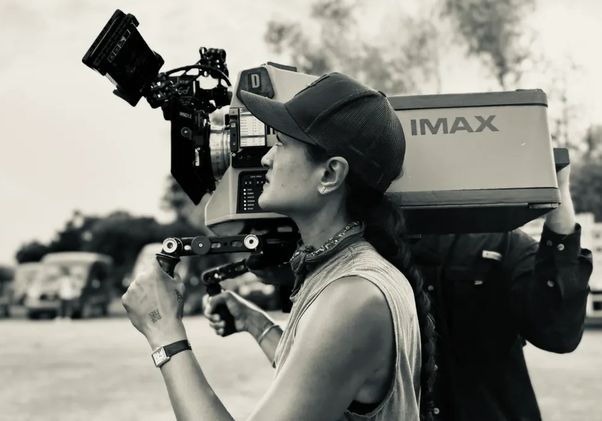

Oscar-nominated cinematographer on the UCLA Extension course that changed her path — and more media coverage of UCLA

On this week’s IndieWire Filmmaker Toolkit podcast, Autumn Durald Arkapaw talks about what it would mean to be the first woman to win the Oscar for Best Cinematography, and the career journey that led her to this point. Arkapaw, who is up for an Academy Award for her work on Ryan Coogler's “Sinners,” did not take a traditional path in film, but found her footing after an old advertising boss bought her a night course at UCLA Extension to get her started. Now, she could make Oscar history at the 98th Annual Academy Awards. Read more about UCLA in today’s Associated Press, Salon and other outlets.

The global reach of the war in Iran is growing — and more media coverage of UCLA

In an article in the Los Angeles Times, several UCLA experts speak about how the U.S.-Israeli war in Iran has drawn in nations from around the world, creating more pressure for countries directly involved, and pushing out the conflict’s timeline. UCLA sociologist Kevan Harris speaks about the impact of past wars in the region on the global stage, and UCLA political scientist Benjamin Radd looks ahead to possible outcomes. Both Harris and Radd are affiliated with the UCLA International Institute. Read more about UCLA in today’s KNBC-TV.

UCLA doctors hope larger-than-life display gets people talking about colorectal cancer — and more media coverage of UCLA

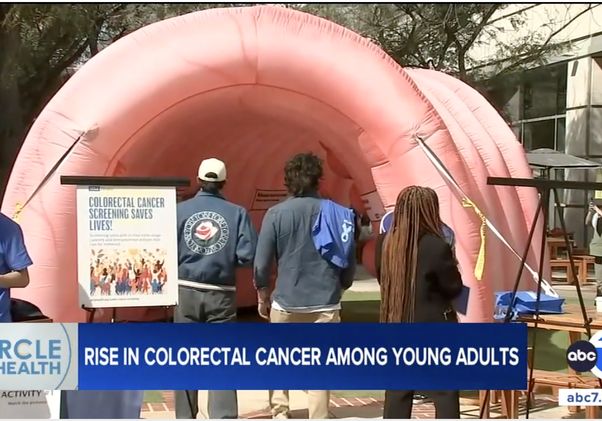
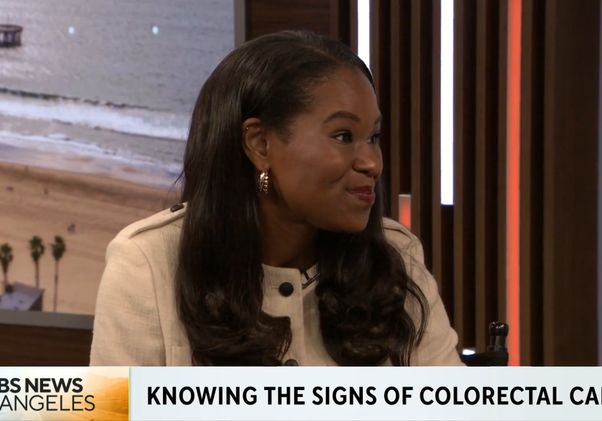
In a KABC-TV segment, UCLA gastroenterologist Fola May speaks about the increased risk of colorectal cancer in men and women under 50 at an event hosted at the UCLA Ronald Reagan Medical Center to educate the public about the growing crisis surrounding the disease. To spread awareness, a walk-through, inflatable colon was put on display on March 6, allowing visitors to see and learn about polyps, early-stage cancers and advanced disease. Read more about UCLA in today’s ABC News, New York Times and other outlets.

Supreme Court justices are getting in the habit of curbing state courts. Is it fair? — and more media coverage of UCLA

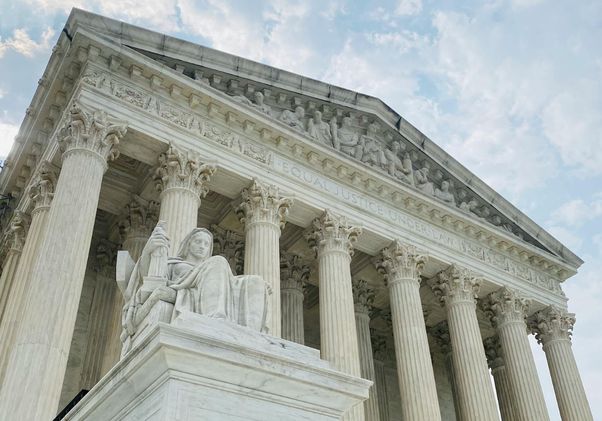
A New York Times news analysis examines accusations from liberal justices that the U.S. Supreme Court is increasingly using its emergency docket to intervene before states’ highest courts can weigh in. Richard Hasen, founding director of the Safeguarding Democracy Project at the UCLA School of Law, said the court’s action in an election-mapping dispute may have been a response to what appeared to be a novel redistricting approach in New York — potentially a one-off move rather than a signal the justices will routinely intervene in state election-law decisions. Still, Hasen said he could not recall another elections case where the court intervened on an emergency basis before a state high court had acted. Read more about UCLA in today’s New York Times.

Hollywood still undervalues Latinas. LIFE Film Festival gives them the spotlight — and more media coverage of UCLA

Los Angeles Times’ “De Los” reported that according to UCLA’s 2025 Hollywood Diversity Report, which looked at the 104 top-performing English-language movies released in 2024, only 1% of leading roles went to Latinos; less than 5% of directors were Latino; and approximately 2% of writers were Latino. Latinos make up nearly 20% of the U.S. population. When it comes to gender, the disparities were even more glaring. There were zero Latina directors and screenwriters in the top theatrical movie releases of 2024. Read and see more about UCLA in The Independent, Men’s Journal and other outlets.
The SAVE Act could make it a lot harder to vote. Here’s why that matters — and more media coverage of UCLA

In an interview on NPR’s “Fresh Air,” UCLA’s Richard Hasen joins host Terry Gross to unpack the ramifications of President Trump’s SAVE Act, legislation that would allow for a federal takeover of elections, making registration and voting much more difficult. Hasen, who is also the founding director of the Safeguarding Democracy Project at the UCLA School of Law, discusses how we got here, the barriers the act would pose to voters, the realism of the act making 2026’s election timeline, and whether such a move is constitutional. Read more about UCLA in today’s NBC News, Wall Street Journal and other outlets.
Gen Alpha is sick of superheroes — and more media coverage of UCLA

An article in Vice features new findings from the Center for Scholars & Storytellers at UCLA that found Gen Z and Gen Alpha media consumers, ages 10 to 24, prefer emotionally available male characters over unknowable, emotionally distant superheroes by a huge margin. The study, titled “Teens & Screens,” is part of the center’s Teen Snapshot series, and gets into specifics of characters already on TV that are shining examples of these preferred male archetypes. Read more about UCLA in today’s Associated Press, Los Angeles Times and other outlets.

Technologists are exposing the ‘stunning’ environmental impacts of corporate AI — and more media coverage of UCLA

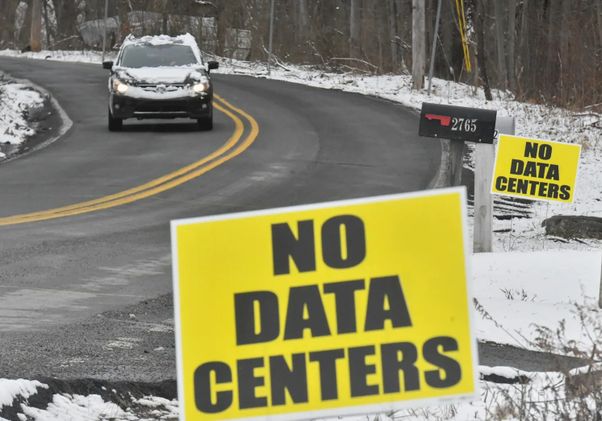
In a Mercury News commentary piece co-written by UCLA’s Ramesh Srinivasan, the professor of information studies warns of the hidden environmental toll of AI data centers and the risks associated with AI’s rising surveillance of individuals’ data. Srinivasan, who is the founder and director of the Digital Cultures Lab at UCLA, and his co-writer urge that there are ways to wield technology responsibly that benefit all, offering some insights into a possible blueprint for change. Read more about UCLA in today’s New York Times, CBS News and other outlets.

Mobile mammogram unit visits Skid Row, where women’s health services are scarce — and more media coverage of UCLA

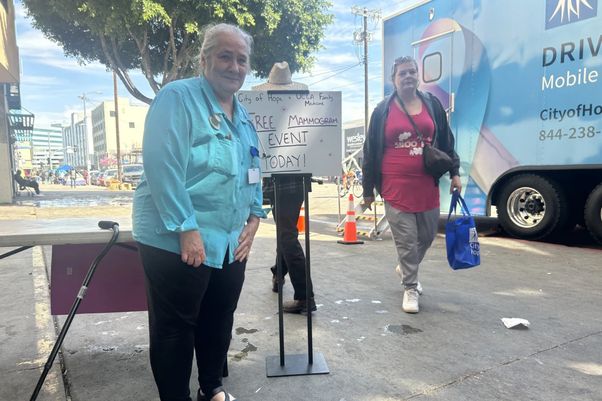
LAist reported that Union Rescue Mission found that 87% of women living at the shelter were not up to date on breast cancer or cervical cancer screenings. “We couldn’t just ignore it anymore,” said Mary Marfisee, the shelter’s family medical services director and a UCLA faculty physician. “We can't refer them out. It’s been harder and harder to get women's health services, so we just sat down and said, ‘No, we gotta do it ourselves.’” See more about UCLA in NPR, CalMatters and other outlets.

UCLA psychologist weighs in on psychosis portrayal in ‘The Pitt’ — and more media coverage of UCLA

In a New York Times article about how HBO Max’s “The Pitt” portrays psychosis, UCLA psychologist Carrie Bearden, director of the Center for the Assessment and Prevention of Prodromal States, explained that suspiciousness and unusual thoughts can signal elevated risk for developing a psychotic disorder. The story underscores the importance of recognizing and addressing early symptoms. See more about UCLA in today’s Bloomberg, People and other outlets.

Scientists believe they’ve found the meaning of the Easter Island statues — and more media coverage of UCLA

Popular Mechanics featured UCLA archaeologist Jo Ann Van Tilburg in an article about her team’s latest breakthrough in the search for answers about the famed statues on the island of Rapa Nui, better known as Easter Island. For over three decades, Van Tilburg and members of the Rapanui community have studied the stone heads, recently proposing that the statues were placed to aid in agricultural food production. New soil testing, in collaboration with the University of the South in Tennessee, supports this conclusion. See more about UCLA in today’s NPR, Earth.com and other outlets.

Terence Tao explains the promise of generative AI — and more media coverage of UCLA

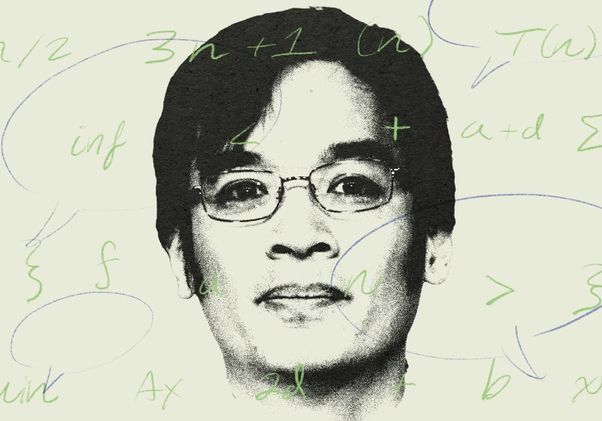
Much of the excitement around the news has stemmed from the adjudicator of these AI-written proofs: Terence Tao, a UCLA professor who is widely considered to be the world’s greatest living mathematician, reported The Atlantic. When Tao was interviewed about what AI can offer mathematics, he was more tempered. The AI-generated Erdős solutions are impressive, he said, but not overwhelmingly so: The bots have functionally landed some “cheap wins,” Tao said. See more about UCLA in today’s LAist, New York Times and other outlets.

AI is confident it’s solving ‘impossible’ proofs. Are mathematicians convinced? — and more media coverage of UCLA

Live Science spoke with UCLA mathematician Terence Tao about how AI models are becoming increasingly proficient at generating convincing mathematical proofs, raising concerns about the potential for accepting incorrect proofs without full understanding. “If you were a terrible mathematician, you would also be a terrible mathematical writer, and you would emphasize the wrong things,” said Tao, who is the 2006 winner of the prestigious Fields Medal. “But AI has broken that signal.” See more about UCLA in today’s CNN, New York Times and other outlets.

Professor interviewed on administration’s deportation policies — and more media coverage of UCLA

The New Yorker spoke by phone with Ahilan Arulanantham, a law professor at UCLA and the faculty co-director of the Center for Immigration Law and Policy. During the conversation, they discussed how judges have tried to limit the Trump administration’s use of this third-country loophole by demanding that it bring wrongly deported immigrants home, the legal process that allows this type of deportation, and how the Supreme Court’s unwillingness to rein in the Trump Administration has strained federal courts. See more about UCLA in today’s Los Angeles Times, KCBS-TV and other outlets.

UCLA gastroenterologist urges earlier colorectal cancer screening — and more media coverage of UCLA

CBS News Los Angeles featured UCLA gastroenterologist Dr. Fola May discussing the rise of colorectal cancer diagnoses in adults under 50 and the importance of early detection. May noted that a disease once most common in older patients is now increasingly appearing in people in their 30s and 40s, and emphasized that screening should begin at age 45 — or earlier for those with a family history or symptoms. Read more about UCLA in today’s NBC News, Independent and other outlets.

Data shows the biggest threats to LA’s parks and nature spots — and more media coverage of UCLA

In a commentary in the Los Angeles Times, Jon Christensen, founder and director of The Laboratory for Environmental Strategies at UCLA — which provided data and analysis to support the park needs assessment for the city of Los Angeles — writes: “The city of Los Angeles is turning its back on parks and nature, even after investing in a yearlong, citywide park needs assessment. There’s no good time for a major city to do this, especially in an era of climate change, let alone in L.A.” Read more about UCLA in today’s Forbes, Associated Press and other outlets.

Studies show incidents like ICE raids can revive Democrats’ multiracial coalition — and more media coverage of UCLA

In a commentary in The Hill, UCLA’s Efrén Pérez, a professor of political science and psychology, and director of the UCLA Race, Ethnicity, Politics and Society Lab, writes: “Our evidence shows that the path to a revitalized Democratic coalition runs through solidarity between all people of color. It also clearly indicates that Latinos are predisposed to be reliable Democrats and active allies in collective struggles against a still racially unequal society.” Read more about UCLA in today’s New York Times, Axios and other outlets.

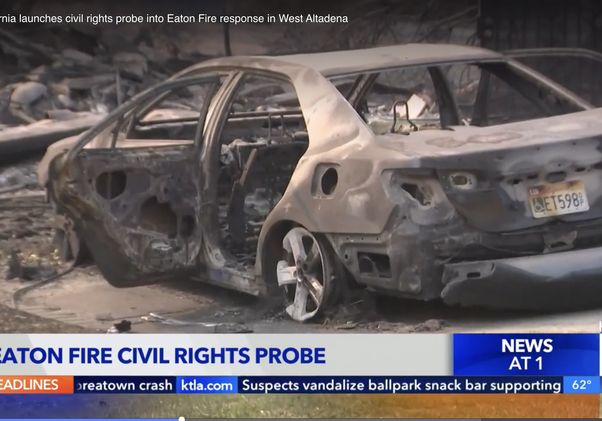
UCLA research cited as California launches civil rights inquiry into Eaton Fire response — and more media coverage of UCLA

KTLA-TV reported that California Attorney General Rob Bonta has launched a civil rights investigation into the emergency response to the Eaton Fire in West Altadena, following UCLA research that found the blaze disproportionately affected Black residents in the historically Black community. The research comes from a January 2025 data brief from the UCLA Ralph J. Bunche Center for African American Studies, the UCLA Center for Neighborhood Knowledge and the UCLA Latino Policy and Politics Institute. Read more about UCLA in today’s Associated Press, Time and other outlets.

UCLA astronomer uncovers comet behavior ‘we’ve never seen before’ — and more media coverage of UCLA

The New York Times reported on new findings from UCLA astronomer David Jewitt, who discovered that Comet 41P/Tuttle-Giacobini-Kresák dramatically slowed its rotation to a stop and then began spinning in the opposite direction, an unprecedented event that may help explain how small comets ultimately break apart. Using images from the Hubble Space Telescope, Jewitt said the extreme shift suggests some comets may be “blown to bits by their own spin.” Read more about UCLA in today’s Time, Scientific American and other outlets.

UCLA program gets $2.2 million boost to support fire-impacted youth — and more media coverage of UCLA

LAist reported on California Governor Gavin Newsom’s announcement of a $2.2 million gift that will go to UCLA Health’s Sound Body Sound Mind program to support the mental health of young survivors of last year’s firestorms. The funds will come from LA Rises, a public-private partnership mostly supported by philanthropic donors. UCLA’s Matt Flesock and Catherine Mogil were interviewed. Read more about UCLA in today’s Independent, Los Angeles Times and other outlets.

Strangers come together for an interactive video game marathon — and more media coverage of UCLA

From the Los Angeles Times: About a quarter of the audience — a crowd that was familiar with the multiple video game style represented in “asses.masses” — couldn’t stand the endurance test. The UCLA Nimoy Theater brought together strangers for a seven-hour video game and reflection on political dissent in what the writer terms “a work of urgency.” The event is part of the Center for the Art of Performance at UCLA's current season. Edgar Miramontes, the center’s executive and artistic director, was interviewed. Read more about UCLA in today’s New York Times, LAist’s “AirTalk” and other outlets.

UCLA ecologist on the case for keeping your garden dark at night — and more media coverage of UCLA

The Washington Post spoke with UCLA’s Travis Longcore about an increasing concern among ecologists: the rise in excessive nighttime garden lighting. Illuminating gardens harms insects, birds, bats and other small mammals, and can even make plants less productive. It may seem like your garden “goes to sleep,” says Longcore, senior associate director of the UCLA Institute of Environment and Sustainability. “But then there’s all these things that come to life at night.” Read more about UCLA in today’s CNN, USA Today and other outlets.

UCLA environmental health expert weighs in on new death toll attributed to wildfires — and more media coverage of UCLA

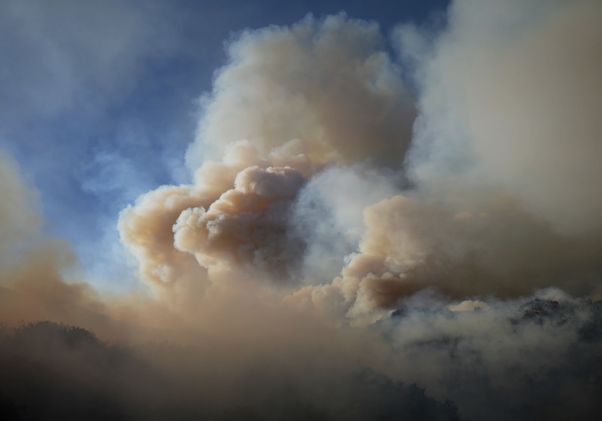
The Associated Press cited UCLA Fielding School of Public Health professor Michael Jerrett in response to a recent study tying particle pollution from wildfire smoke to 24,100 U.S. deaths per year. “The estimates they’re coming up with are reasonable,” said Jerrett. “We need more of them. It’s only if we’re doing multiple studies with many different designs that we gain scientific confidence of our outcomes.” Read more about UCLA in today's New York Times, Agence-France Presse and other outlets.
Load More Items Loading...