UCLA environmental professors Magali Delmas and Susanna Hecht are among the climate experts, politicians and industry leaders gathering in San Diego today for a University of California climate change summit.
A “Thinking L.A.” event, jointly sponsored by UCLA and Zocálo at the RAND Corporation Tuesday evening, explored the roots of the fervor surrounding fracking in California.
A team of engineers from the UCLA Henry Samueli School of Engineering and Applied Science, in partnership with Southern California Edison, has received a $1.62 million grant to build a hybrid energy storage system.
The UCLA Center for World Health and the LA5 Rotary Club brought together a panel of experts to talk about the failing health of the Earth and what mega-cities can do about it before an audience of 200 business peoplein downtown Los Angeles.
Switching the IM Field to artificial turf saved UCLA nearly $700,000 through the DWP’s commercial rebate program, similar to the rebate program for homeowners who replace their lawns.
Join experts for a panel discussion of the impact of plastic pollution, one of the most significant environmental problems facing our oceans, at 7:30 p.m. on Tuesday, July 14 at the UCLA Hammer Museum’s Billy Wilder Theater.
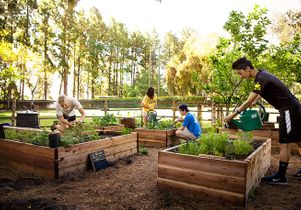
UCLA Residential Life’s Sustainable Living Community and the Education for Sustainable Living Program at UCLA have won awards given to honor innovation at UC and CSU campuses.
The new artificial turf on the intramural field and other places combined with drought-tolerant landscaping from five large projects, could save 11.3 million gallons annually.
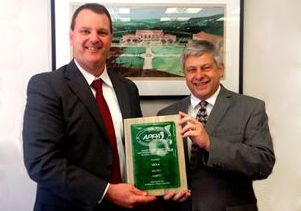
UCLA has been recognized in three categories of the 2015 Energy Efficiency and Sustainability Best Practice Awards Competition from the California Higher Education Sustainability Conference.
Despite progress, dirty air and water are just the beginning of the region's environmental troubles. The findings, which are believed to be the most comprehensive environmental report card for any region in the nation, show the county needs tutoring to bring up its grades.
UCLA researchers looked at 22 indicators to determine grades in six main categories — water, air, ecosystem health, waste, environmental quality of life, and energy and greenhouse gases.
UCLA Transportation’s focus on alternative transportation and success in reducing traffic and emissions at UCLA won an award from the California Environmental Protection Agency
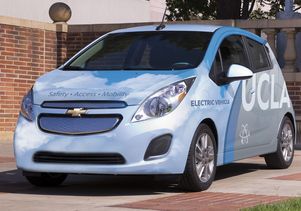
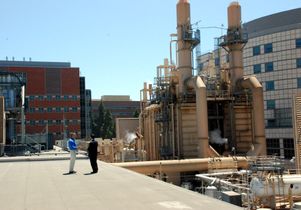
As the UC system marches toward its goal of carbon neutrality by 2025, UCLA is doing its part by using less energy in buildings, converting half of its fleet to alternative-fuel vehicles and adding LEED-certified green buildings.
UCLA joins the Billion Dollar Green Challenge with a $15 million fund dedicated to sustainability projects. The savings created by each project will help support the next.